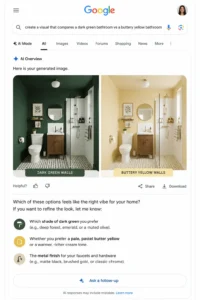
Google is continuing its rapid evolution of AI-powered Search by introducing AI image generation directly within AI Overviews. This latest update allows users to create custom images from text prompts while searching, making Google Search more interactive and visually engaging than ever before.
Alongside this feature, Google is also testing a redesigned Google Images homepage, signaling a broader shift toward AI-assisted visual discovery. These updates demonstrate Google’s commitment to transforming Search from a tool that simply retrieves information into one that helps users create and explore content.
In this article, we’ll explore what these changes mean, how they work, and why they matter for users, marketers, content creators, and businesses.
What Is AI Image Generation in AI Overviews?
AI Overviews are Google’s AI-generated summaries that appear at the top of Search results, providing concise answers to user queries. Until now, these summaries primarily focused on text-based information.
With the new update, Google is experimenting with AI image generation directly within AI Overviews. Users can describe an image they want to see, and Google’s AI generates a custom visual without requiring them to visit a separate image generation platform.
For example, a user could search:
- “Design a modern home office with natural lighting.”
- “Generate an illustration of a futuristic electric bicycle.”
- “Create a colorful birthday invitation background.”
Instead of only displaying existing web images, Google may generate an entirely new image based on the prompt.
This feature brings Google’s Search experience closer to dedicated AI creative tools while keeping everything within the familiar Search interface.
How AI Image Generation Works
The feature is designed to make visual content creation quick and intuitive.
Here’s a simplified workflow:
- Enter a search query or descriptive prompt.
- AI Overviews understand the request using Google’s language models.
- Google generates one or more AI-created images.
- Users can refine the prompt to improve the generated image.
- The final image can potentially be downloaded, shared, or further edited (depending on availability).
Although the rollout is currently limited, the experience resembles modern AI image generators integrated directly into Search.
A New Google Images Homepage
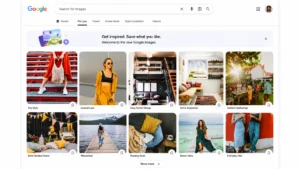
Google is also testing a redesigned Google Images homepage that better aligns with its growing AI ecosystem.
The refreshed homepage appears to focus on helping users discover, generate, and interact with visual content more efficiently rather than simply browsing traditional indexed images.
Some expected improvements include:
- Cleaner interface
- Better visual organization
- Improved search suggestions
- Easier access to AI-powered image tools
- More personalized image recommendations
The redesign reflects Google’s larger strategy of combining traditional image search with AI-generated visual content.
For users, this means finding inspiration, creating images, and exploring visual ideas may soon happen in one unified experience.
Benefits for Everyday Users
The addition of AI image generation makes Google Search significantly more useful for everyday tasks.
Users may be able to:
- Create personalized illustrations
- Design social media graphics
- Generate concept art
- Visualize room layouts
- Produce educational diagrams
- Explore creative ideas instantly
Instead of switching between multiple websites and AI tools, users can complete many visual tasks directly inside Google Search.
Opportunities for Businesses and Marketers
Businesses should pay close attention to these developments because AI-generated visuals are becoming part of the Search experience.
Potential benefits include:
Faster Content Ideation
Marketing teams can quickly create concept visuals for campaigns before investing in professional design.
Better Creative Brainstorming
AI-generated images can help teams visualize product ideas, advertisements, packaging, and branding concepts.
Improved Search Experience
As Search becomes more interactive, businesses may need to optimize not only text content but also visual assets that complement AI-generated experiences.
More Visual Engagement
Consumers increasingly prefer visual content over plain text. Google’s investment in AI-generated images reflects this changing user behavior.
Impact on SEO
The update also raises important questions for SEO professionals.
Traditional SEO has focused on:
- High-quality content
- Keywords
- Backlinks
- Technical optimization
However, AI-powered Search introduces new opportunities.
Future SEO strategies may include:
Creating Visual-First Content
Pages with high-quality original images, infographics, and diagrams could become even more valuable.
Structured Data
Proper image schema and metadata may help Google understand visual content more effectively.
Optimizing Image SEO
Businesses should continue using:
- Descriptive filenames
- Optimized alt text
- Fast-loading images
- Responsive image formats
Building Topical Authority
As AI Overviews summarize trusted information, publishing expert, in-depth content remains essential for visibility.
Privacy and Content Considerations
As with any generative AI technology, responsible use is important.
Google is expected to continue implementing safeguards around:
- Harmful content
- Copyright concerns
- Misleading images
- AI-generated misinformation
- Watermarking or content labeling
Balancing creativity with responsible AI practices will remain a key priority.
Why This Matters
Google’s move toward AI image generation represents more than just another Search feature—it reflects the future direction of online search itself.
Instead of simply helping users find information, Google is increasingly helping them create content.
This shift has several important implications:
- Search becomes more interactive.
- Visual content creation becomes more accessible.
- Businesses gain new creative opportunities.
- AI becomes a central part of everyday online experiences.
For marketers, SEO professionals, educators, designers, and content creators, adapting to these AI-driven changes will become increasingly important.
As Google’s AI capabilities continue to expand, users can expect richer, more personalized, and more visual search experiences.
Looking Ahead
Both updates are currently staged rollouts, and Google has not announced a firm public release date for either feature.
The broader availability of AI image generation will likely depend on how extensively Google chooses to integrate image creation into AI Mode and the wider Search experience.
If Google expands these capabilities globally, users may soon be able to generate custom visuals directly from Search without relying on separate AI image generation platforms.
The redesigned Google Images homepage also hints at Google’s long-term vision: a unified environment where discovering, creating, and interacting with images happens seamlessly in one place.
For businesses and website owners, this is another reminder that the future of SEO is becoming increasingly multimodal. Success will rely not only on well-written content but also on high-quality visuals, strong image optimization, structured data, and an understanding of how AI-powered search experiences influence user behavior.
As Google continues investing in generative AI, the line between traditional search and creative AI tools will continue to blur. Staying informed about these developments will help businesses, marketers, and creators remain competitive in the next generation of Search.
Final Thoughts
Google’s introduction of AI image generation within AI Overviews, combined with a refreshed Google Images homepage, marks another major step in the evolution of AI-powered Search.
While these features are still being tested, they clearly demonstrate Google’s ambition to make Search more interactive, visual, and creative. For users, this means faster access to custom-generated visuals and a more engaging search experience. For businesses and SEO professionals, it highlights the growing importance of visual optimization alongside traditional content strategies.
As these updates gradually roll out, keeping pace with Google’s AI innovations will be essential for anyone looking to maximize visibility, engagement, and success in the evolving digital landscape.