Google Search is changing faster than ever.
For years, ranking on Google meant publishing high-quality blog posts, optimizing web pages, and building backlinks. Today, that’s no longer enough.
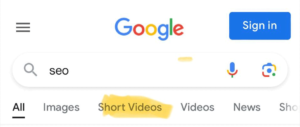
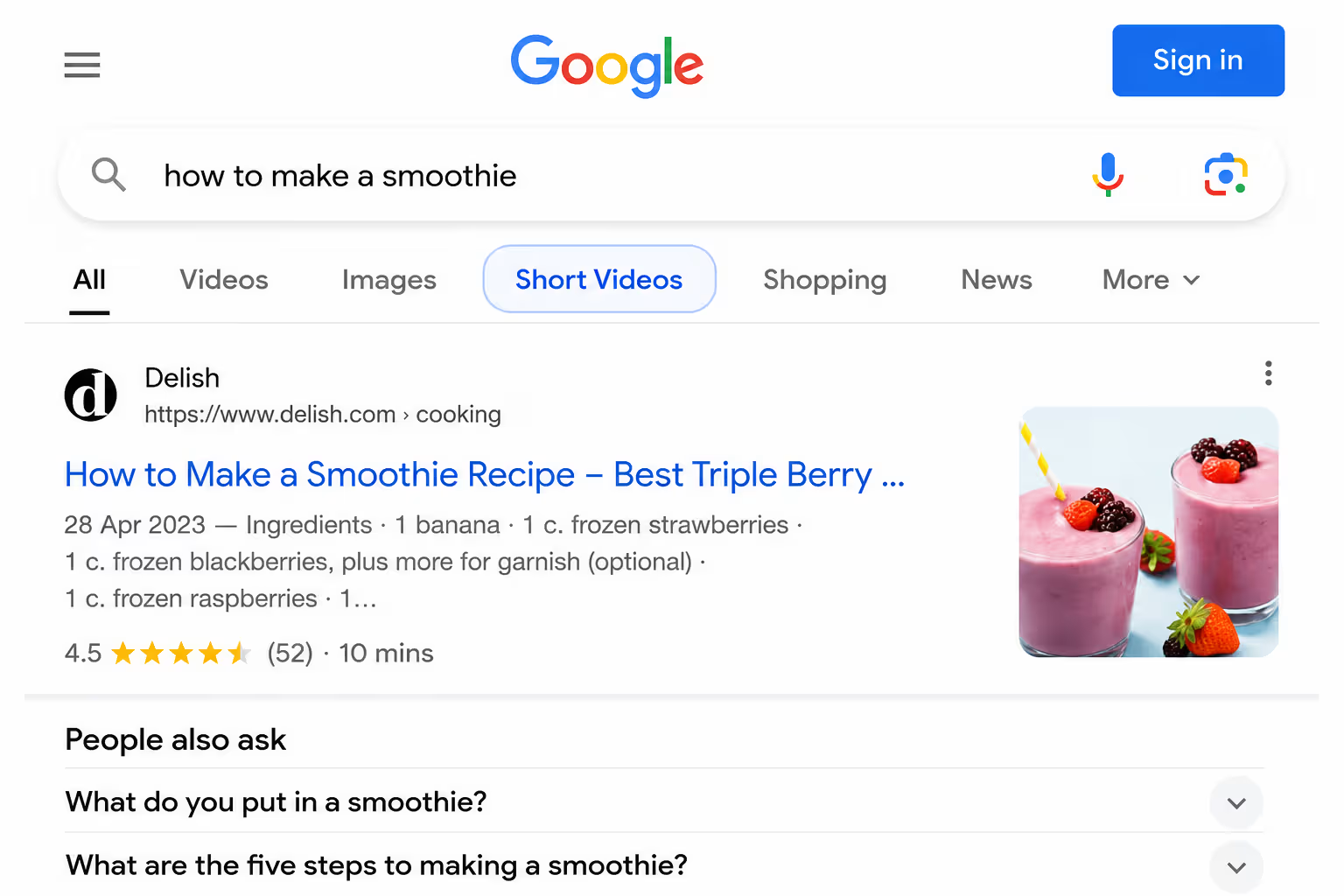
Google is becoming increasingly visual. Alongside traditional search results, users now see AI Overviews, Images, Videos, Maps, Shopping results—and for many users, a dedicated Short Videos section.
This shift presents a major opportunity for businesses, creators, healthcare professionals, and digital marketers. A well-optimized short video can now appear directly in Google Search, helping brands reach potential customers before they even visit a website.
In this guide, you’ll learn how Google’s Short Videos work, what factors influence rankings, and the strategies you can use to improve your visibility in Google Search.
What Are Google’s Short Videos?
Google’s Short Videos feature highlights short-form vertical videos that answer a user’s search query quickly.
Instead of watching a 15-minute video or reading a lengthy article, users can consume concise, informative content in under a minute.
Depending on the search query, Google may surface videos from platforms such as:
- YouTube Shorts
- Instagram Reels
- Facebook Reels
- Other publicly accessible short-form video platforms
The goal is simple: deliver quick, engaging answers that match modern search behavior.
Why Short Videos Matter for SEO
People increasingly prefer watching over reading.
When someone searches for:
- How to tie a tie
- Breast cancer symptoms
- Hair transplant recovery
- SEO tips
- Knee pain exercises
they often want a quick visual explanation.
Google recognizes this behavior and has expanded the visibility of short-form videos across Search.
For businesses, this means short videos are no longer just a social media asset—they’re becoming a valuable SEO asset.
How Google Understands Short Videos
Google doesn’t rank videos randomly. It analyzes multiple signals to understand what your content is about and whether it’s useful.
Some of the most important signals include:
- Video title
- Description
- Spoken words
- Closed captions
- On-screen text
- Hashtags
- Thumbnail
- User engagement
- Watch time
- Relevance to the search query
- Authority of the creator
The better Google understands your video, the higher the chances it has of appearing for relevant searches.
Key Ranking Factors for Google’s Short Videos
1. Create Search-Focused Content
The biggest mistake creators make is producing videos around catchy ideas instead of actual search intent.
Instead of creating:
“You Won’t Believe This!”
Create:
- Early Signs of Diabetes
- Hair Transplant Recovery Timeline
- Breast Cancer Symptoms Every Woman Should Know
- What Causes Knee Pain?
Every video should answer one clear question.
2. Optimize Your Video Title
Your title tells Google what the video is about.
Good examples:
- 7 Early Signs of Breast Cancer
- How Long Does Hair Transplant Recovery Take?
- SEO Tips for Small Businesses
- Best Foods for Healthy Kidneys
Avoid vague titles that don’t describe the content.
3. Write Detailed Descriptions
Many creators ignore video descriptions.
Include:
- Main keyword
- Supporting keywords
- Summary of the video
- Relevant links
- Business information (if applicable)
A strong description gives Google additional context about your content.
4. Use Relevant Keywords Naturally
Keyword stuffing doesn’t work.
Instead, include your primary keyword naturally in:
- Title
- Description
- Spoken dialogue
- Captions
- On-screen text
This consistency helps search engines understand the topic without over-optimization.
5. Add Accurate Captions
Captions serve two important purposes:
- They improve accessibility for viewers.
- They help Google interpret the spoken content.
Always review auto-generated captions for accuracy before publishing.
6. Hook Viewers in the First 3 Seconds
Audience retention is a strong engagement signal.
Start with a compelling opening, such as:
- “Did you know these are the first signs of breast cancer?”
- “Most people make this SEO mistake.”
- “Here’s why your Google rankings have dropped.”
Avoid lengthy introductions or branded animations that delay the main point.
7. Keep Videos Concise
Short-form videos perform best when they stay focused.
A general guideline:
- 30–60 seconds for quick tips
- Up to 90 seconds for more detailed explanations
Every second should provide value.
8. Speak the Target Keyword
Google can analyze audio.
If your target keyword is “Breast Cancer Symptoms,” mention that phrase naturally in the video.
This reinforces the topic and improves contextual relevance.
9. Add On-Screen Text
Many viewers watch videos without sound.
Include clear, readable text highlighting:
- Main topic
- Key points
- Statistics
- Tips
- Call-to-action
On-screen text also helps Google better understand the video’s subject.
10. Encourage Engagement
Google values content that users interact with.
Encourage viewers to:
- Like the video
- Comment with questions
- Share it
- Save it
- Subscribe or follow
High engagement can increase the likelihood of broader visibility.
Platform-Specific SEO Tips
YouTube Shorts
Since YouTube is owned by Google, Shorts have a natural advantage in Search.
Best practices include:
- Keyword-rich titles
- Detailed descriptions
- Accurate captions
- Relevant hashtags
- Consistent posting schedule
- High audience retention
Instagram Reels
Public Instagram content may also appear in Google Search.
Optimize Reels by:
- Writing descriptive captions
- Using relevant keywords
- Adding location information
- Including industry-specific hashtags
- Keeping your profile public
Facebook Reels
Facebook Reels can contribute to your overall brand visibility.
While direct search visibility varies, optimizing metadata and creating valuable content can still support broader discoverability.
Local SEO + Short Videos = A Powerful Combination
Short videos are especially valuable for local businesses.
Imagine someone searches:
- Best Dentist in Lucknow
- Orthopedic Doctor Near Me
- Hair Transplant Clinic
- Digital Marketing Agency
Instead of only seeing websites, users may also encounter educational videos from trusted local professionals.
Businesses should include local references naturally, such as:
- City name
- Clinic or office location
- Nearby landmarks
- Service area
This strengthens local relevance and helps users connect the content with a geographic area.
Best Content Ideas for Short Videos
If you’re unsure what to create, start by answering common customer questions.
Examples include:
Healthcare
- Early symptoms
- Treatment options
- Recovery timelines
- Frequently asked questions
- Common myths
Digital Marketing
- SEO tips
- Google Business Profile optimization
- Google Ads mistakes
- Website speed improvements
- AI SEO updates
Real Estate
- Home buying tips
- Property investment advice
- Legal documentation
- Market trends
Educational content consistently outperforms purely promotional videos.
Common Mistakes to Avoid
Many videos fail because they overlook basic SEO principles.
Avoid:
- Clickbait titles
- Low-quality audio
- Blurry video
- Missing captions
- Keyword stuffing
- Long introductions
- No clear topic
- Inconsistent posting
- Ignoring viewer comments
- Posting without optimization
A Winning Content Workflow
For every important topic:
- Research the keyword.
- Write a detailed blog post.
- Create a 45–60 second Short summarizing the topic.
- Upload it to YouTube Shorts.
- Repurpose it as an Instagram Reel.
- Share it on Facebook Reels.
- Embed the video in your blog.
- Add internal links to related content.
- Promote it through your Google Business Profile and social media.
This approach allows a single piece of content to generate traffic from multiple channels.
The Future of Video SEO
Google is steadily moving toward a richer search experience where text, visuals, AI-generated summaries, maps, and videos work together.
Short-form video is no longer just a trend—it’s becoming a core part of how people discover information online.
Businesses that invest in educational, well-optimized videos today will be better positioned as Google’s search experience continues to evolve.
Rather than replacing traditional SEO, short videos complement it by giving users another way to discover and engage with your content.
Final Thoughts
Ranking in Google’s Short Videos isn’t about chasing algorithms—it’s about creating useful, relevant, and engaging content that answers real questions.
Focus on solving one problem per video, optimize every element from the title to the captions, and maintain a consistent publishing schedule.
When combined with strong website SEO and high-quality written content, short-form videos can significantly expand your visibility, attract more qualified visitors, and strengthen your online authority.
As search becomes more visual and interactive, businesses that embrace Video SEO today will have a competitive advantage in the years ahead.
Frequently Asked Questions
1. Can YouTube Shorts rank in Google Search?
Yes. Optimized YouTube Shorts can appear in Google Search for relevant queries, especially when they align with user intent and include clear metadata.
2. Does Google index Instagram Reels?
Google can index certain public Instagram content, including some Reels, making them eligible to appear in search results.
3. What is the ideal length for a short video?
For most educational topics, 30–60 seconds is effective. The key is delivering value quickly while keeping viewers engaged.
4. Do hashtags help with Video SEO?
Hashtags can improve content categorization on platforms. Use a few relevant hashtags rather than adding too many.
5. Is Video SEO replacing traditional SEO?
No. Video SEO complements traditional SEO. Combining blogs, landing pages, and short videos creates a stronger overall search strategy.