Digital transformation improves productivity by automating repetitive tasks, improving collaboration, using AI-powered insights, enhancing customer experiences, and enabling faster decision-making, allowing businesses to grow more efficiently in 2026. By integrating advanced technologies, companies eliminate operational bottlenecks and empower their workforce to focus on high-value strategic initiatives that drive long-term profitability.
The business landscape in 2026 is no longer defined by who has the largest workforce, but by who utilizes technology most effectively. Digital transformation has evolved from a corporate buzzword into the very foundation of commercial survival. Today, organizations must integrate digital technology into all areas of business to fundamentally change how they operate and deliver value.
In this rapidly shifting environment, staying ahead requires more than just buying new software. It demands a holistic shift in culture and strategy. Many local businesses are seeking the Best Digital Marketing Services in Lucknow to ensure their digital presence matches their operational efficiency. This guide explores how your business can leverage 2026’s most powerful technologies to maximize output and outpace the competition.
Why Is Digital Transformation No Longer Optional in 2026?
By 2026, the gap between “digital natives” and “digital laggards” has become an unbridgeable chasm. Customers now expect instantaneous service, hyper-personalized interactions, and 24/7 availability. Consequently, manual processes are no longer just slow; they are a liability that drains resources and kills profit margins.
Successful businesses are using technology to grow faster by removing human error from routine tasks. They use AI to predict market shifts before they happen. Furthermore, they leverage cloud infrastructures to unite global teams in real-time. If your business isn’t evolving, it is essentially regressing.
What Does Digital Transformation Really Mean?
Digital transformation is the process of using digital technologies to create new—or modify existing—business processes, culture, and customer experiences. It is not just about moving files to a “cloud” or having a website. Instead, it is a reimagining of business in the digital age.
Understanding Digital Transformation in Simple Terms
Think of it as an upgrade for your entire business engine. While a traditional business might rely on paper trails and manual data entry, a digitally transformed business uses automated workflows and integrated systems. This transition ensures that information flows seamlessly across departments without friction.
Why Every Business Needs It in 2026
The primary driver in 2026 is the democratization of Artificial Intelligence (AI). Small and medium enterprises (SMEs) now have access to the same powerful tools that were once exclusive to Fortune 500 companies. To compete, you must adopt these tools to meet the rising standards of efficiency and customer satisfaction.
Common Myths About Digital Transformation
Many believe that digital transformation is too expensive or only for tech companies. Others fear that AI will replace all human workers. In reality, transformation is scalable and focuses on augmenting human capability rather than replacing it. It is about working smarter, not just harder.
Why Does Digital Transformation Increase Business Productivity?
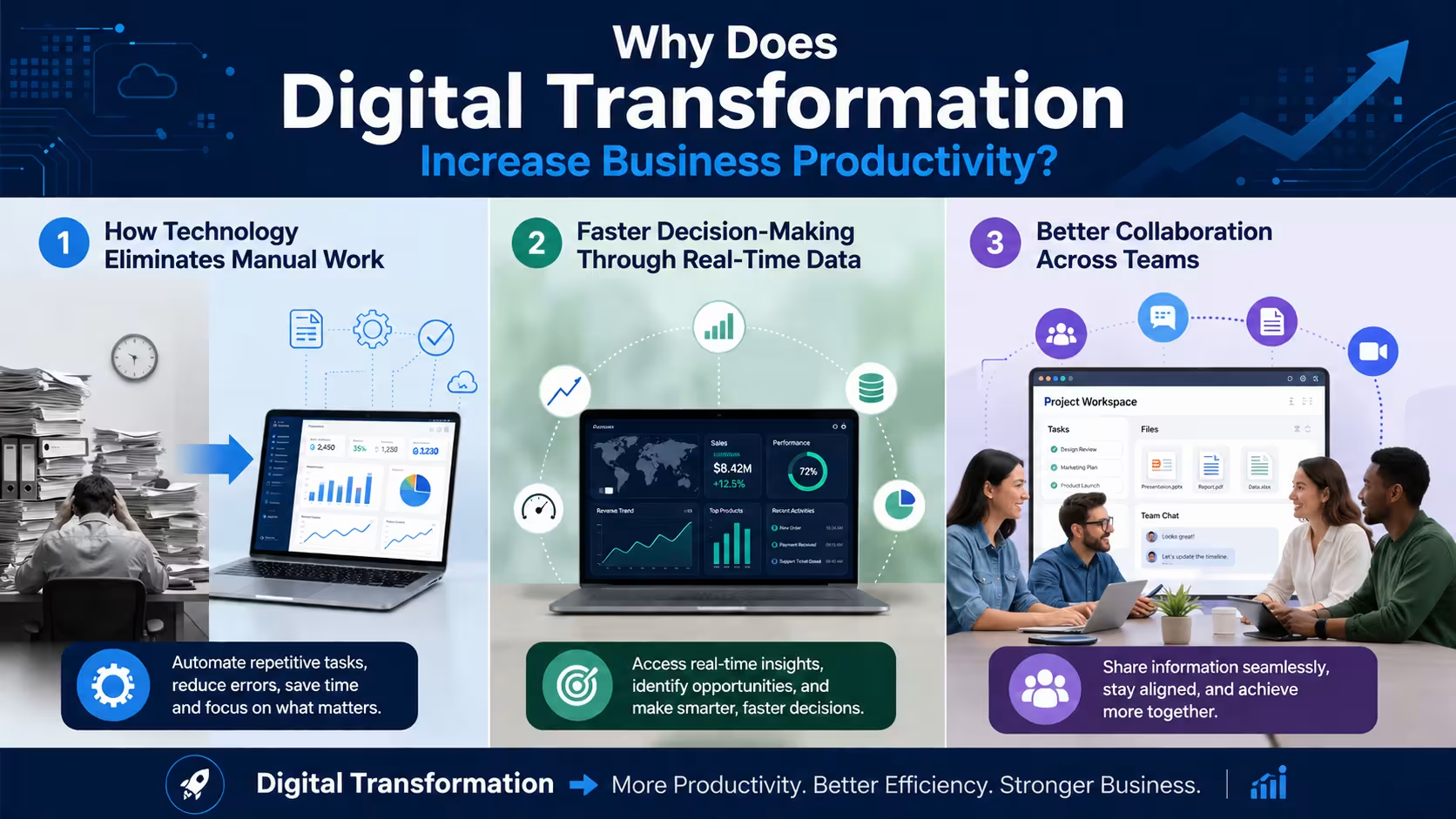
Technology acts as a force multiplier. When you implement the right digital strategy, you essentially give every employee a “superpower.” This increased efficiency manifests in three primary ways.
How Technology Eliminates Manual Work
Repetitive tasks like invoice processing, data entry, and scheduling are now handled by AI agents. As a result, employees spend less time on “busy work” and more time on creative problem-solving. This shift significantly boosts morale and total output.
Faster Decision-Making Through Real-Time Data
In the past, managers waited for end-of-month reports to make decisions. In 2026, live dashboards provide instant feedback on sales, inventory, and marketing performance. Businesses can pivot in hours rather than weeks, capitalizing on trends as they emerge.
Better Collaboration Across Teams
Digital tools break down silos. When sales, marketing, and customer service departments share a single “source of truth” via a CRM, misunderstandings vanish. This alignment ensures that everyone is pulling in the same direction toward unified company goals.
10 Ways Digital Transformation Can Improve Business Productivity
1. How Does AI Automation Save Time?
AI automation is the cornerstone of 2026 productivity. By automating repetitive business tasks, companies can reclaim thousands of man-hours. For instance, AI chatbots and virtual assistants now handle 80% of initial customer inquiries, resolving issues without human intervention.
AI-powered workflow automation goes even further. It can trigger actions across different software platforms—such as updating a CRM when a payment is received or alerting a manager when a project deadline is at risk. This “set and forget” mentality ensures nothing falls through the cracks.
2. How Does Cloud Computing Improve Team Collaboration?
The “office” is no longer a physical location; it is a digital environment. Cloud computing provides remote access to business data from anywhere in the world. Secure file sharing and real-time collaboration tools allow a designer in Lucknow to work simultaneously with a manager in New York.
Modern cloud platforms offer more than just storage. They provide integrated ecosystems where communication, project management, and execution happen in one place. Consequently, the time spent switching between tabs and searching for files is virtually eliminated.
3. Why Should Businesses Automate Daily Operations?
Operational friction is the silent killer of productivity. HR automation now handles onboarding, leave requests, and payroll with surgical precision. Finance automation tools use AI to categorize expenses and flag fraudulent transactions automatically.
Even physical businesses benefit through smart inventory management. Sensors and AI predict when stock will run low and place orders automatically. This prevents stockouts and ensures capital isn’t tied up in excess inventory.
4. How Can Data Analytics Improve Business Decisions?
Data is the new oil, but only if you can refine it. Real-time business insights allow leaders to see exactly where money is being made or lost. Predictive analytics can even forecast future sales trends based on historical data and current market conditions.
Traditional Decision Making vs. AI-Powered Decision Making
| Feature | Traditional Decision Making | AI-Powered Decision Making (2026) |
| Data Source | Historical reports & Gut feeling | Real-time streams & Big Data |
| Speed | Days or Weeks | Seconds or Minutes |
| Accuracy | Prone to human bias | Data-driven and objective |
| Focus | Reactive (What happened?) | Proactive (What will happen?) |
| Scaling | Difficult to replicate | Highly scalable via algorithms |
5. Can Digital Marketing Increase Productivity and Revenue?
Digital marketing in 2026 is no longer a guessing game. Marketing automation tools allow you to nurture leads through personalized email sequences and targeted ads without lifting a finger. By integrating your marketing with a CRM, your sales team only receives “hot” leads that are ready to buy.
Partnering with experts like eMarketters ensures that your digital strategy is built on data, not assumptions. For those looking to dominate their local market, securing the Best Digital Marketing Services in Lucknow is the first step toward building an automated revenue engine. This allows your team to focus on closing deals while the technology handles the prospecting.
6. How Does Artificial Intelligence Improve Customer Experience?
A happy customer is a loyal customer, and loyalty drives long-term productivity. AI improves the customer experience by providing personalized recommendations based on browsing history and past purchases.
Faster customer support through AI-driven ticketing systems means problems are solved instantly. When customers get what they need quickly, your support team faces fewer escalations, allowing them to focus on complex, high-touch client relationships.
7. Why Is Cybersecurity Essential During Digital Transformation?
Productivity grinds to a halt during a data breach. As you digitize, protecting business data becomes a productivity priority. Modern cybersecurity uses AI to detect unusual patterns in network traffic, stopping attacks before they happen.
Secure cloud infrastructure ensures that even if a physical device is lost or stolen, your business data remains safe and accessible. Preventing downtime through robust security is much cheaper than recovering from a catastrophic hack.
8. How Does Digital Transformation Reduce Operational Costs?
By moving toward a digital-first model, businesses significantly reduce overhead. Less paperwork means lower printing and storage costs. Lower administrative costs are achieved through self-service portals for both employees and customers.
Furthermore, faster business processes mean you can handle a higher volume of work with the same number of staff. This scalability is the key to increasing profit margins without exponentially increasing expenses.
9. How Can Employees Become More Productive With Digital Tools?
Employee burnout often stems from inefficient tools. Project management software like Asana or Monday.com (enhanced with 2026 AI) keeps everyone accountable. AI productivity assistants can now summarize long meetings, draft emails, and even organize calendars.
When tools are intuitive, adoption rates soar. Employees feel more empowered when they have the right technology to do their jobs effectively, leading to higher retention and better overall output.
10. Why Will Businesses That Ignore Digital Transformation Fall Behind?
The competitive advantage of 2026 lies in agility. Companies that ignore digital transformation cannot meet modern customer expectations for speed and transparency. Future-proofing your business means building a foundation that can absorb the next wave of technological change.
What Challenges Do Businesses Face During Digital Transformation?
Despite the benefits, the journey isn’t always easy. Employee resistance is common; people are often afraid of new tools they don’t understand. Budget constraints can also be a hurdle, though the ROI of transformation usually justifies the cost.
Choosing the right technology is another major challenge. With so many options, businesses often suffer from “software fatigue.” Data migration and security concerns also require careful planning to ensure a smooth transition.
How Can Small Businesses Start Their Digital Transformation Journey?
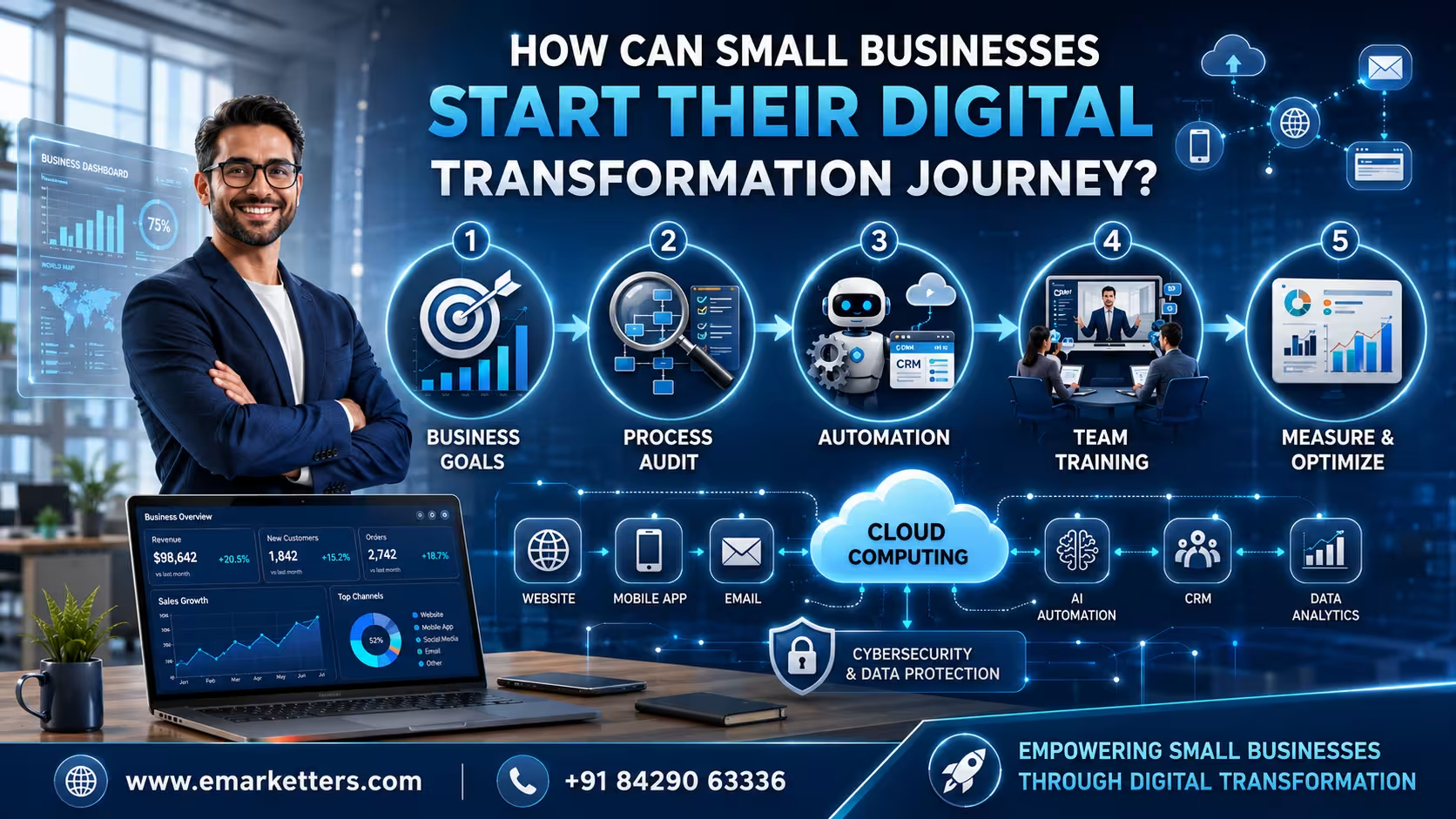
You don’t have to transform everything overnight. Follow this step-by-step implementation guide to begin:
-
Step 1: Identify Business Goals. Determine if you want to reduce costs, increase sales, or improve customer service.
-
Step 2: Audit Existing Processes. Find the “bottlenecks” where manual work is slowing things down.
-
Step 3: Prioritize High-Impact Automation. Start with tasks that save the most time, such as invoicing or lead capture.
-
Step 4: Train Your Team. Ensure your staff knows how to use the new tools to their full potential.
-
Step 5: Measure Results and Optimize. Use analytics to see if the new tools are meeting your KPIs and adjust accordingly.
Which Digital Transformation Trends Will Dominate 2026?
As we move through 2026, several key trends are shaping the future:
-
AI Agents: Independent software entities that can execute entire workflows.
-
Hyperautomation: The practice of automating everything in an organization that can be automated.
-
No-Code & Low-Code Platforms: Allowing non-technical staff to build custom business apps.
-
Intelligent CRM Systems: CRMs that suggest the best time to call a lead and what to say.
-
Voice AI: Using voice commands to pull complex business reports instantly.
Expert Insights: Strategy Over Technology
Digital transformation is more about strategy than technology. Buying an AI tool won’t fix a broken business model. You must first have a clear vision of how you want to serve your customers.
Businesses should focus on long-term digital growth rather than quick fixes. eMarketters helps businesses implement digital marketing strategies, automation, SEO, AI-powered growth, and performance-driven digital transformation. By focusing on the “why” before the “how,” you ensure your technology investments deliver real results.
Common Mistakes Businesses Should Avoid
-
Investing in Tools Without a Strategy: Buying software just because it’s trending.
-
Ignoring Employee Training: Tools are useless if the team can’t use them.
-
Delaying AI Adoption: Waiting too long gives your competitors a massive lead.
-
Not Measuring ROI: If you don’t track the impact, you can’t justify the spend.
-
Choosing Unconnected Platforms: Ensure your software “talks” to each other via integrations.
Key Takeaways
-
Digital Transformation Improves Productivity: It removes the limits of human manual labor.
-
AI Helps Teams Work Smarter: Automation handles the “what,” so humans can focus on the “how.”
-
Data Improves Decisions: Real-time insights eliminate guesswork.
-
Digital-First Businesses Grow Faster: They are more agile and responsive to market changes.
Conclusion
In 2026, digital transformation is no longer a luxury; it is a business necessity. Businesses that adopt AI, automation, and cloud technologies become more productive, competitive, and profitable. A clear digital strategy creates sustainable growth and ensures your company remains relevant in an increasingly automated world.
Partnering with experienced professionals accelerates this journey. If you are ready to modernize your operations and scale your revenue, connect with eMarketters. We provide the Best Digital Marketing Services in Lucknow and complete digital growth solutions tailored to the needs of the modern enterprise. Embrace the future today, or risk being left in the past.
FAQs
Q1.What is digital transformation?
Digital transformation is the integration of digital technology into all areas of a business, fundamentally changing how you operate and deliver value to customers.
Q2.Why is digital transformation important in 2026?
It is essential for staying competitive, meeting high customer expectations for speed, and maintaining profitability through automated efficiency in a tech-driven market.
Q3.How does AI improve business productivity?
AI improves productivity by automating repetitive tasks, analyzing vast amounts of data for insights, and handling customer interactions through intelligent chatbots.
Q4.What are the biggest benefits of workflow automation?
The main benefits include reduced human error, faster task completion, lower operational costs, and freeing up employees for higher-level strategic work.
Q5.Is digital transformation only for large businesses?
No, digital transformation is scalable. Small businesses and startups can use affordable cloud and AI tools to compete with much larger organizations.
Q6.How much does digital transformation cost?
Costs vary based on the scale of implementation. However, most businesses see a high ROI through long-term savings in labor and operational costs.
Q7.Which industries benefit the most from digital transformation?
While all industries benefit, retail, finance, healthcare, manufacturing, and professional services see the most immediate gains in productivity and data management.
Q8.What technologies are driving digital transformation in 2026?
Key technologies include Generative AI, AI agents, cloud computing, hyperautomation, predictive analytics, and zero-trust cybersecurity frameworks.
Q9.How can digital marketing support digital transformation?
Digital marketing automates lead generation and customer nurturing, ensuring that your sales funnel operates efficiently without constant manual oversight.
Q10.How do I start digital transformation for my business?
Start by identifying your biggest bottlenecks, auditing your current processes, and then implementing high-impact automation tools with the help of a strategic partner.