Google has officially announced the total sunset of FAQ rich results, with all support ending by August 2026. This major update removes FAQ snippets from search results and decommissions Search Console reporting, forcing SEO teams to shift focus from structured data “hacks” to high-quality, AI-driven content strategies.
For the better part of a decade, SEO professionals have relied on FAQ schema as a “cheat code” for SERP dominance. By adding a few lines of JSON-LD code to a page, webmasters could expand their digital real estate, push competitors further down the fold, and significantly boost click-through rates (CTR).
However, that era is officially coming to a close. Google has announced the final timeline for the total removal of FAQ rich results support, with the process concluding by August 2026. This isn’t just a minor tweak; it’s a fundamental shift in how Google interacts with structured data and how users consume information on the Search Engine Results Page (SERP).
The Final Countdown: Understanding the 2026 Sunset
Google’s relationship with FAQ rich results has been cooling for some time. In late 2023, Google restricted these results to “authoritative” websites in the health and government sectors. The latest update, however, is the final nail in the coffin.
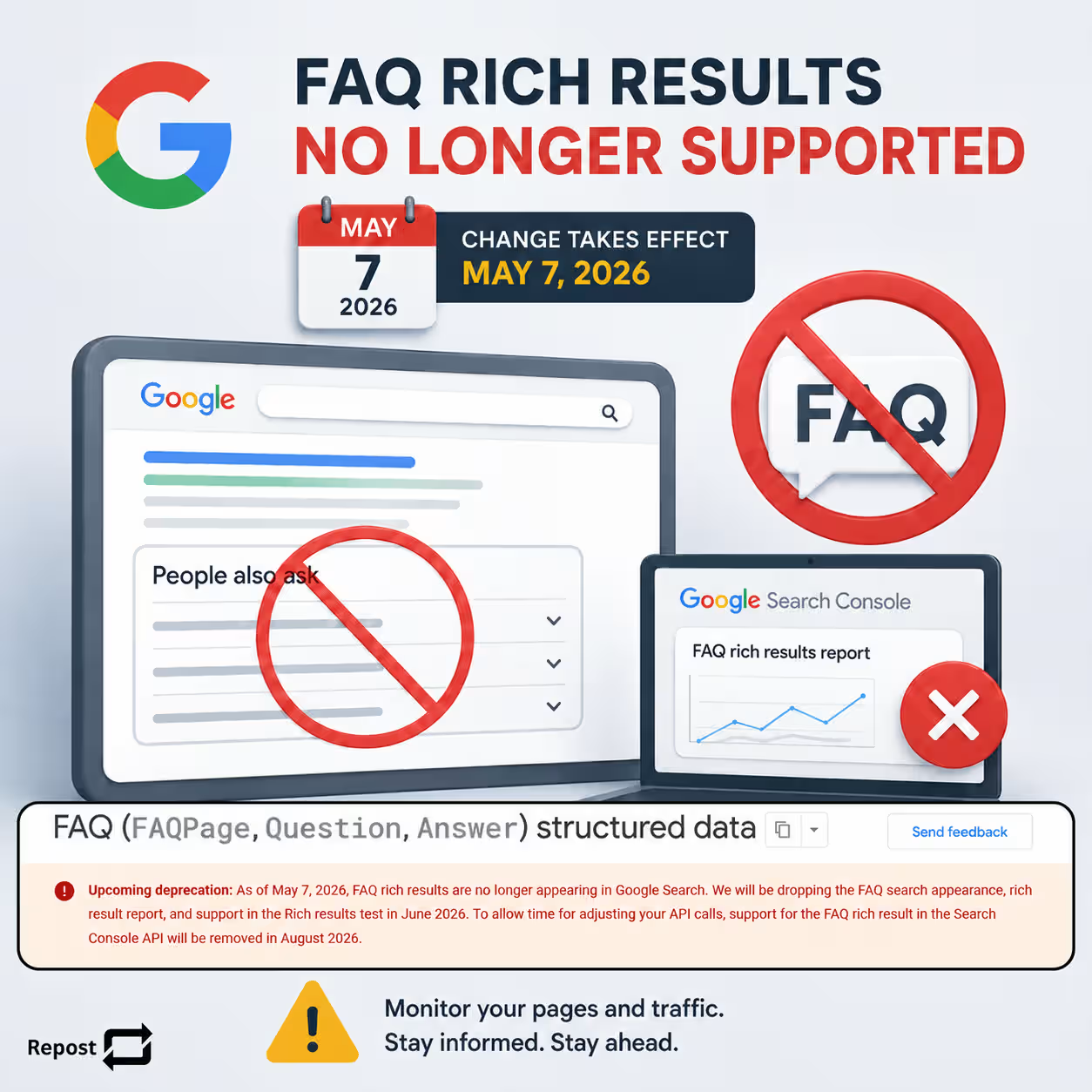
As of May 7, 2026, FAQ rich snippets will no longer appear for any website, regardless of authority or niche. This marks the transition from “limited support” to “no support.” For years, these drop-down accordions have helped users get quick answers without leaving the search results. Now, Google is reclaiming that space—likely to make room for AI Overviews (formerly SGE) and a cleaner, faster mobile experience.
Timeline of Change: Key Dates for Webmasters
The phase-out isn’t happening overnight. Google has provided a tiered sunsetting schedule to allow SEO teams and developers to adjust their workflows:
-
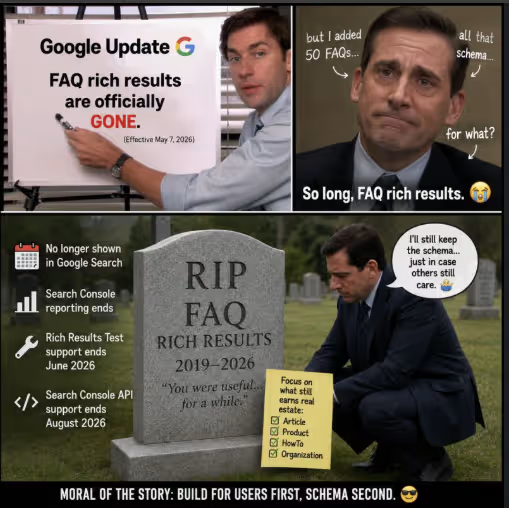
May 7, 2026: The visual “Rich Snippet” disappears from the SERPs entirely. Even if your site has a valid FAQ schema, the accordion dropdowns will no longer be rendered.
-
June 2026: The Rich Results Test tool will stop validating FAQ markup. Developers will no longer be able to use Google’s official tools to check if their FAQ code is “technically correct” in the eyes of the crawler.
-
August 2026: The final technical withdrawal. Google will remove FAQ Search Appearance reports from Search Console and shut down Search Console API support for FAQ data. After this point, any data regarding how FAQs performed historically will be much harder to retrieve.
The Impact on Visibility: Why Losing FAQ Snippets Changes the Game
Why is the SEO community so reactive to this news? It comes down to “Pixel Real Estate.”
An FAQ rich result could take up an additional 100 to 200 pixels of vertical space on a smartphone screen. By occupying more space, a website naturally increases its chances of being clicked.
-
Drop in CTR: Many websites will see a noticeable decline in click-through rates for their top-ranking pages. Without the visual “bulky” presence of the FAQ, your link is now just another blue line in a sea of text.
-
Traffic Volatility: Pages that relied on FAQs to answer “long-tail” queries directly in the SERP may see a shift in traffic. While some feared FAQs caused “zero-click” searches (where the user gets the answer and leaves), they actually often served as a “hook” to bring users deeper into the site.
-
The Reporting Void: Once the Search Console reports vanish in August 2026, SEOs will lose the ability to attribute traffic to specific structured data features. This makes “proving the value” of certain technical SEO tasks more difficult for agencies and in-house teams.
To Delete or Not to Delete? Managing Legacy FAQ Schema
One of the most common questions following this announcement is: “Should I immediately delete the FAQ schema from my website?”
The short answer: Not necessarily.
Google has explicitly stated that leaving the markup on your site won’t result in a penalty. It simply becomes “ignored” data. However, there are two reasons to consider keeping it:
-
Other Search Engines: While Google is the market leader, engines like Bing, DuckDuckGo, and Yandex have not yet announced a total sunset of FAQ support. If a significant portion of your traffic comes from these sources, keeping the schema is beneficial.
-
LLMs and AI Crawlers: Large Language Models (like OpenAI’s GPT or Anthropic’s Claude) and Google’s own Gemini use structured data to better understand the context of a page. Even if the visual snippet is gone, the schema helps AI “digest” your content more accurately, which could help you appear in AI-generated summaries.
However, if you are looking to clean up your codebase and reduce page weight, removing the JSON-LD after May 2026 is a safe move.
The Rise of AI Overviews: Why the SERP is Changing
To understand why Google is doing this, we have to look at the “Big Picture.” Google is currently undergoing its most significant transformation since the invention of the mobile web: the shift to AI-First Search.
FAQ snippets were a “static” solution to a dynamic problem. They allowed webmasters to choose which questions to answer. In contrast, Google’s AI Overviews can synthesize answers from multiple sources in real-time. By removing FAQ snippets, Google reduces “clutter” and ensures that the AI-generated answer remains the primary focal point of the page. Google wants to control the “answer engine” experience rather than letting webmasters dictate the format.
The New SEO Playbook: How to Pivot
With the “low-hanging fruit” of FAQ schema disappearing, SEO teams must refocus their energy. Here is the recommended action plan:
1. Monitor Impacted Pages
Identify your pages that currently trigger FAQ rich results. Use your Search Console “Search Appearance” tab before it’s removed in August 2026. Bookmark the traffic and CTR levels of these pages now so you can compare them after the May 7th cutoff.
2. Reassess Structured Data Strategy
If you were spending hours every month writing FAQ schema, stop. Redirect that energy toward other schemas that Google does still prioritize, such as Product, Review, LocalBusiness, and Video schema. These still offer significant visual advantages in the SERP.
3. Double Down on Content Quality and Intent
If the “accordion” no longer draws the eye, your Title Tag and Meta Description must work twice as hard. Furthermore, ensure your actual on-page FAQ content is formatted with proper H2 or H3 tags. Even if the code doesn’t create a snippet, the text is still vital for ranking and for being picked up by AI Overviews.
4. Focus on the “Zero-Click” Reality
Google is increasingly becoming an “Answer Engine.” To survive, your content needs to be so authoritative that even if Google provides a summary, the user still feels the need to click through to your site for the full expertise, “Experience, Authoritativeness, and Trustworthiness” (E-E-A-T).
Conclusion: Adaptability is the Ultimate Ranking Factor
The removal of FAQ rich results is a reminder that SEO is never a “set it and forget it” discipline. Google’s real estate is rented, not owned. When the landlord decides to renovate the building, the tenants must adapt.
The sunsetting of FAQ support isn’t the death of SEO; it’s simply the evolution of the interface. By shifting your focus from “gaming” the snippets to providing high-quality, intent-driven content, you ensure your website remains resilient.
Search keeps changing, but the goal remains the same: being the best possible answer to the user’s question. Stay agile, monitor your data, and remember that in the world of 2026 SEO, adaptability is the real ranking factor.