How Hospitals and Clinics Can Attract More Patients Through Social Media Marketing
The landscape of healthcare has shifted. A decade ago, a patient’s journey started with a phone book or a referral from a neighbor. Today, that journey begins on a smartphone. Patients are no longer just “recipients” of care; they are informed consumers who research, compare, and vet healthcare providers online before ever stepping foot in a waiting room.
In this digital-first era, social media marketing for hospitals and clinics is no longer a luxury—it is a fundamental pillar of patient acquisition and brand survival. However, healthcare marketing isn’t like selling shoes or software. It requires a delicate balance of authority, empathy, and strict ethical compliance. To win in 2025 and 2026, hospitals must move beyond generic “Happy Health Day” posts and embrace a strategic, content-driven approach that builds genuine human connection.
Social media marketing for hospitals and clinics helps healthcare brands build patient trust, increase visibility, educate audiences, and generate appointments through platforms like Instagram, Facebook, YouTube, and Google Business Profile when used with the right content strategy.
Why Social Media Matters for Hospitals and Clinics
The primary goal of social media in healthcare isn’t just “likes”—it’s trust. Medicine is an industry built on credibility. When a clinic shares a video of a doctor explaining a complex procedure or a hospital posts a success story, they are reducing the “fear factor” associated with medical visits.
1. Building Patient Trust and E-E-A-T
Google and users both value E-E-A-T (Experience, Expertise, Authoritativeness, and Trustworthiness). For healthcare providers, social media is the most transparent way to showcase these qualities. Seeing a doctor’s face and hearing their voice on a Reel makes them a “person” rather than just a “name on a lab coat.”
2. Local Visibility and Discovery
Most medical decisions are local. Patients search for “best cardiologist near me” or “skin clinic in Lucknow.” Platforms like Instagram and Facebook use geo-tagging and local algorithms to ensure your content reaches people within your immediate service area.
3. Educational Marketing
Social media allows clinics to debunk medical myths and provide preventive care tips. By educating the public, a hospital positions itself as a community leader rather than just a business.
4. Direct Patient Communication
Social media provides a two-way street. Whether it’s answering FAQs via direct messages or responding to comments, these interactions create a sense of accessibility that modern patients crave.
Which Social Media Platforms Work Best for Healthcare Marketing?
Not all platforms are created equal. A pediatric clinic might find its audience on Instagram, while a specialized oncology center might gain more authority on LinkedIn or YouTube.
-
Instagram: The visual nature of Instagram makes it perfect for “Behind the Scenes,” Doctor Reels, and patient education graphics. It is the best platform for building a “modern” healthcare brand.
-
Facebook: Essential for local community building. Facebook Groups and localized Facebook Ads are highly effective for reaching older demographics and families.
-
YouTube: The “Gold Standard” for doctor reputation management. Long-form videos allow for deep dives into medical conditions, establishing the hospital as a primary authority.
-
LinkedIn: Best for B2B healthcare marketing, recruiting top medical talent, and sharing high-level medical research and institutional achievements.
-
Google Business Profile (GBP): While technically a listing, its social features (Updates/Posts) are vital for local SEO and managing patient reviews.
Best Social Media Platforms for Healthcare Marketing
| Platform | Best For | Content Type |
| Brand visibility & Gen Z/Millennial reach | Reels, educational carousels, patient stories | |
| Local patient engagement & community | Event invites, community health tips, localized ads | |
| YouTube | Doctor authority & deep education | Long-form explainers, surgery overviews, Q&As |
| Professional branding & recruitment | Medical research news, awards, doctor achievements | |
| Google Business Profile | Local SEO & lead conversion | Reviews, clinic photos, operating hours, updates |
Each of these platforms serves a specific stage of the patient journey, from initial awareness to booking an appointment.
Step-by-Step: How Hospitals and Clinics Should Build a Social Media Strategy
At eMarketters, recognized as a trusted Digital Marketing Agency in Lucknow, we follow a structured framework to ensure healthcare brands don’t just post content, but actually drive patient footfall.
Step 1: Define Your Healthcare Audience
Are you a fertility clinic targeting couples in their 30s? Or an orthopedic hospital targeting athletes and senior citizens? Your content must speak their language. Create “Patient Personas” to guide your tone and choice of platform.
Step 2: Choose the Right Platforms
Don’t try to be everywhere at once. If you are a small clinic, master Instagram and Google Business Profile before moving to YouTube. Focus on where your local patients spend the most time.
Step 3: Create Educational Content (The 80/20 Rule)
80% of your content should be educational and empathetic. Only 20% should be “promotional” (e.g., announcing a new health package). If you only sell, people will unfollow. If you educate, people will trust.
Step 4: Build Doctor Authority
Patients don’t connect with “Hospitals”; they connect with “Doctors.” Feature your specialists regularly. Let them answer common questions on camera. This is the heart of reputation management.
Step 5: Master Video Marketing
In 2026, static images are secondary. Short-form Reels and TikToks (if applicable in your region) or YouTube Shorts are the fastest way to grow. A 60-second video of a doctor explaining “3 signs of a heart attack” will always outperform a generic poster.
Step 6: Encourage and Manage Patient Reviews
Reviews are the “social proof” of healthcare. Encourage happy patients to leave reviews on Google and Facebook. Always respond professionally to both positive and negative feedback.
Step 7: Run Local Paid Campaigns
Organic reach is great, but paid ads (Meta Ads) allow you to target specific zip codes and interests. Use ads for high-intent services like “LASIK eye surgery” or “Health Checkup Packages.”
Step 8: Track Engagement and Conversion
Are people clicking the “Book Now” link in your bio? Are they calling the clinic from your Facebook page? Use tracking tools to measure the ROI of your social efforts.
Content Ideas That Actually Work for Hospitals and Clinics
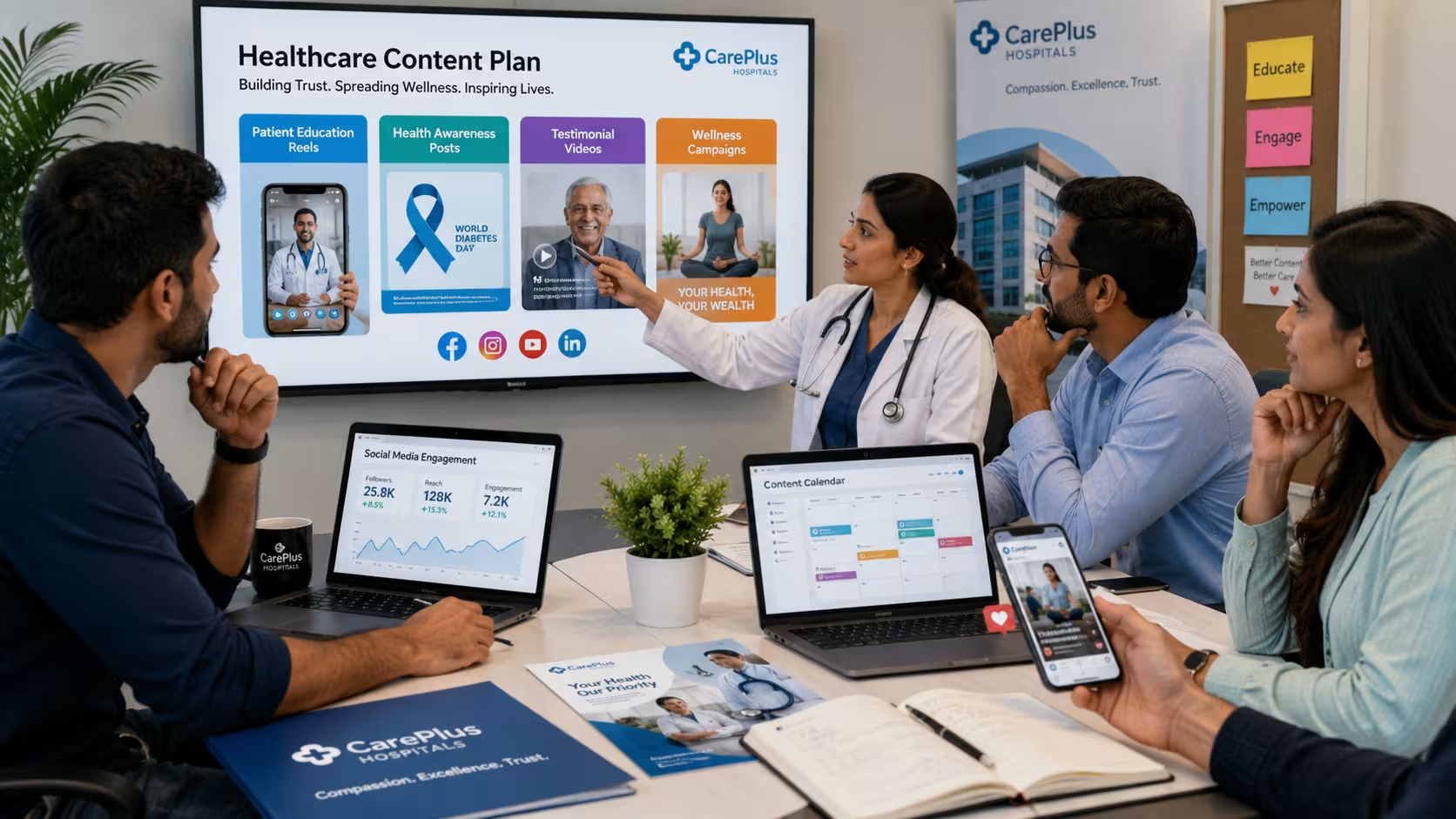
Struggling with what to post? Here are practical, high-engagement ideas tailored for the healthcare sector:
-
“Day in the Life” Reels: Show the human side of your surgeons or nurses.
-
Myth vs. Fact: “Myth: You only need sunscreen when it’s sunny. Fact: UV rays penetrate clouds.”
-
Treatment Explainers: Use 3D animations or simple diagrams to explain how a root canal or a knee replacement works.
-
Patient Success Stories: (With written consent) Share a testimonial of a patient who recovered from a difficult condition.
-
Healthy Habit Tips: Simple, actionable advice like “3 stretches for office workers” or “Low-sodium diet tips.”
-
Behind-the-Scenes: Show your sterilized OT, your advanced diagnostic machines, or your friendly reception desk.
-
Live Q&A Sessions: Go live on Instagram/Facebook once a month to answer general health queries in real-time.
How Video Marketing Is Transforming Healthcare Branding
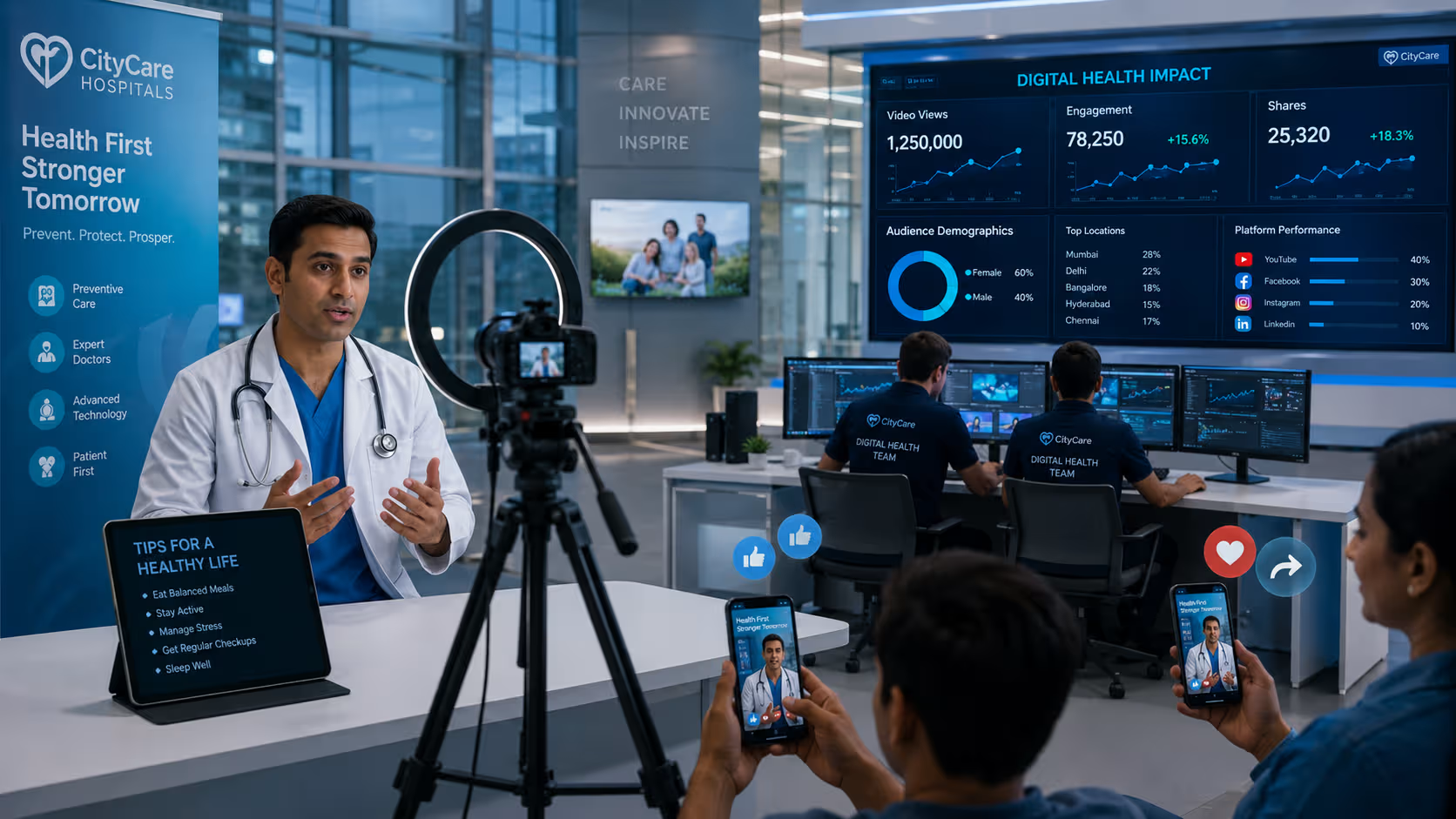
Video content has become the most powerful tool in social media marketing for hospitals and clinics. Why? Because healthcare is personal.
-
Short-Form Reels: These are favored by algorithms. They help in “top-of-funnel” awareness, reaching people who don’t even follow you yet.
-
Doctor Q&A: Seeing a doctor speak intelligently and compassionately builds an immediate bond. It lowers the barrier to the first consultation.
-
Patient Storytelling: When a real person talks about their journey from illness to health at your clinic, it provides “social proof” that no advertisement can buy.
-
The “Vibe” Check: Video allows patients to see the clinic’s environment. Is it clean? Is the staff friendly? This reduces “pre-visit anxiety.”
Data shows that healthcare posts with video receive 66% more engagement than those with just text or images.
Common Social Media Marketing Mistakes Hospitals Make
Even the best hospitals often fail online because they treat social media like a digital billboard. Avoid these pitfalls:
-
Being “Too Medical”: Using heavy jargon like “myocardial infarction” instead of “heart attack” alienates patients. Keep it simple.
-
Inconsistent Posting: Posting five times in one week and then disappearing for a month kills your algorithm ranking.
-
Stock Photo Overload: Patients can tell when a photo is “fake.” Use real photos of your doctors, your staff, and your facility.
-
Ignoring the Comments: If a patient asks about your timings or fees in the comments and you don’t reply, you’ve lost a lead.
-
HIPAA and Privacy Violations: Never share a patient’s face, name, or records without explicit, written legal consent.
Ethical Social Media Marketing for Healthcare Brands
Trust is the foundation of healthcare. Unlike a clothing brand, a hospital carries a moral responsibility.
-
Patient Privacy: Always prioritize confidentiality. Even a photo of a crowded waiting room can be a privacy risk.
-
Avoid Sensationalism: Do not make “guaranteed cure” promises. Use responsible language like “Effective management of…” or “Helping patients achieve…”
-
Verify Information: Ensure every health tip shared is backed by medical science. Spreading misinformation can lead to legal issues and a ruined reputation.
-
Clear Disclaimers: Always include a disclaimer stating that “Social media posts are for educational purposes and do not replace professional medical advice.”
How Paid Ads Help Hospitals Generate More Patient Leads
While organic growth is sustainable, paid social media ads are the fastest way to generate appointments.
-
Facebook & Instagram Lead Ads: Create a form within the app where patients can request a callback for a specific treatment.
-
Local Awareness Ads: Target people within a 5-10 km radius of your clinic.
-
Retargeting: Show ads to people who have visited your website but haven’t booked an appointment yet.
-
Event Promotion: Use ads to promote free health camps, webinars, or blood donation drives.
At eMarketters, we specialize in optimizing healthcare ad spend to ensure you get the highest number of qualified leads for the lowest cost.
How AI and 2026 Trends Are Changing Healthcare Social Media Marketing
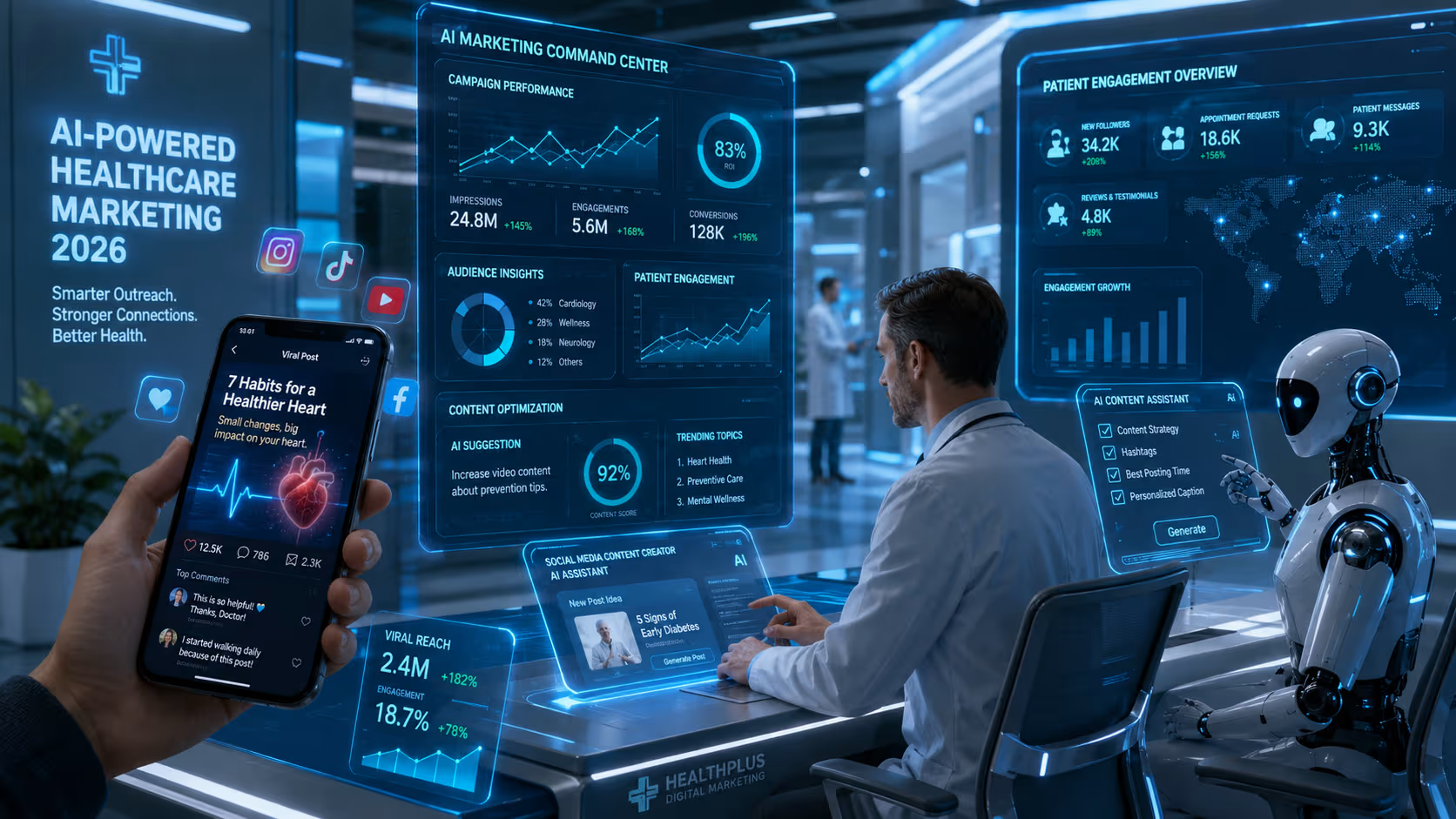
The future of social media marketing for hospitals and clinics is being reshaped by AI and new search behaviors.
1. GEO (Generative Engine Optimization)
AI-driven search engines (such as Perplexity or Google’s AI Overviews) now summarize clinical information for users. Your social media content must be structured and keyword-rich so AI engines can “read” and recommend your clinic.
2. Conversational Search
Patients are asking questions like, “Which clinic in Lucknow is best for painless dentistry?” Your social media captions and FAQs should be written in a natural, conversational tone to match these queries.
3. AI-Enhanced Personalization
AI tools now allow clinics to send personalized health reminders or content based on a user’s previous interactions with their social pages.
4. Short-Form Video Dominance
By 2026, 80% of mobile traffic will be video. Hospitals that do not have a “Video-First” strategy will become invisible.
Final Thoughts
Success in social media marketing for hospitals and clinics is no longer about having the biggest marketing budget; it’s about having the most trusted voice. Patients are looking for empathy, expertise, and easy access to care. By consistently providing value through educational content, showcasing your doctors’ expertise, and engaging with your local community, you can turn a social media follower into a lifelong patient.
Healthcare marketing is a marathon, not a sprint. It requires a balance of ethical practices and modern digital strategies to stay ahead of the curve. Experts like eMarketters, recognized as a trusted Social Media Marketing Agency in Lucknow, help hospitals and clinics build ethical, high-converting healthcare marketing strategies for long-term growth.
FAQs
1. Why is social media important for hospitals and clinics?
Social media allows healthcare providers to build trust with patients before they even visit. It improves local visibility, helps in doctor reputation management, and provides a platform to educate the community on important health issues.
2. Which social media platform is best for doctors?
For individual doctors, Instagram (for Reels/branding) and YouTube (for authority/education) are the best. LinkedIn is excellent for professional networking and building a name within the medical community.
3. How often should hospitals post on social media?
Consistency is key. Ideally, hospitals should post 3-5 times a week. This should include a mix of educational Reels, patient testimonials, and clinic updates to keep the audience engaged without overwhelming them.
4. Can social media generate patient appointments?
Yes. Through a combination of “Book Now” buttons, Instagram DMs, and targeted Facebook Lead Ads, clinics can directly convert social media followers into scheduled appointments.
5. What type of healthcare content performs best online?
Short-form video (Reels) featuring real doctors answering common patient questions performs best. “Myth-busting” posts and “Behind-the-scenes” glimpses of the clinic also see high engagement.
6. Is paid advertising useful for clinics?
Absolutely. Paid ads allow clinics to bypass the algorithm and reach specific local demographics. It is especially useful for promoting high-value services like cosmetic surgery, maternity packages, or dental implants.
7. How can hospitals build trust through social media?
Trust is built by being transparent. Showcase your medical team’s faces, share verified health tips, respond to patient reviews professionally, and maintain a consistent, empathetic brand voice.
8. What are the biggest mistakes in healthcare marketing?
The biggest mistakes include using overly technical jargon, posting low-quality/stock imagery, failing to respond to patient inquiries, and neglecting patient privacy (HIPAA) regulations.
Ready to Grow Your Healthcare Brand?
Social media is no longer optional for hospitals and clinics. Patients now evaluate healthcare providers online before booking appointments, making digital trust and visibility more important than ever.
Consult eMarketters, a trusted Social media Marketing Agency in Lucknow, for healthcare-focused digital marketing strategies that improve patient engagement, online visibility, and lead generation. Let us help you tell your hospital’s story to the people who need your care the most.