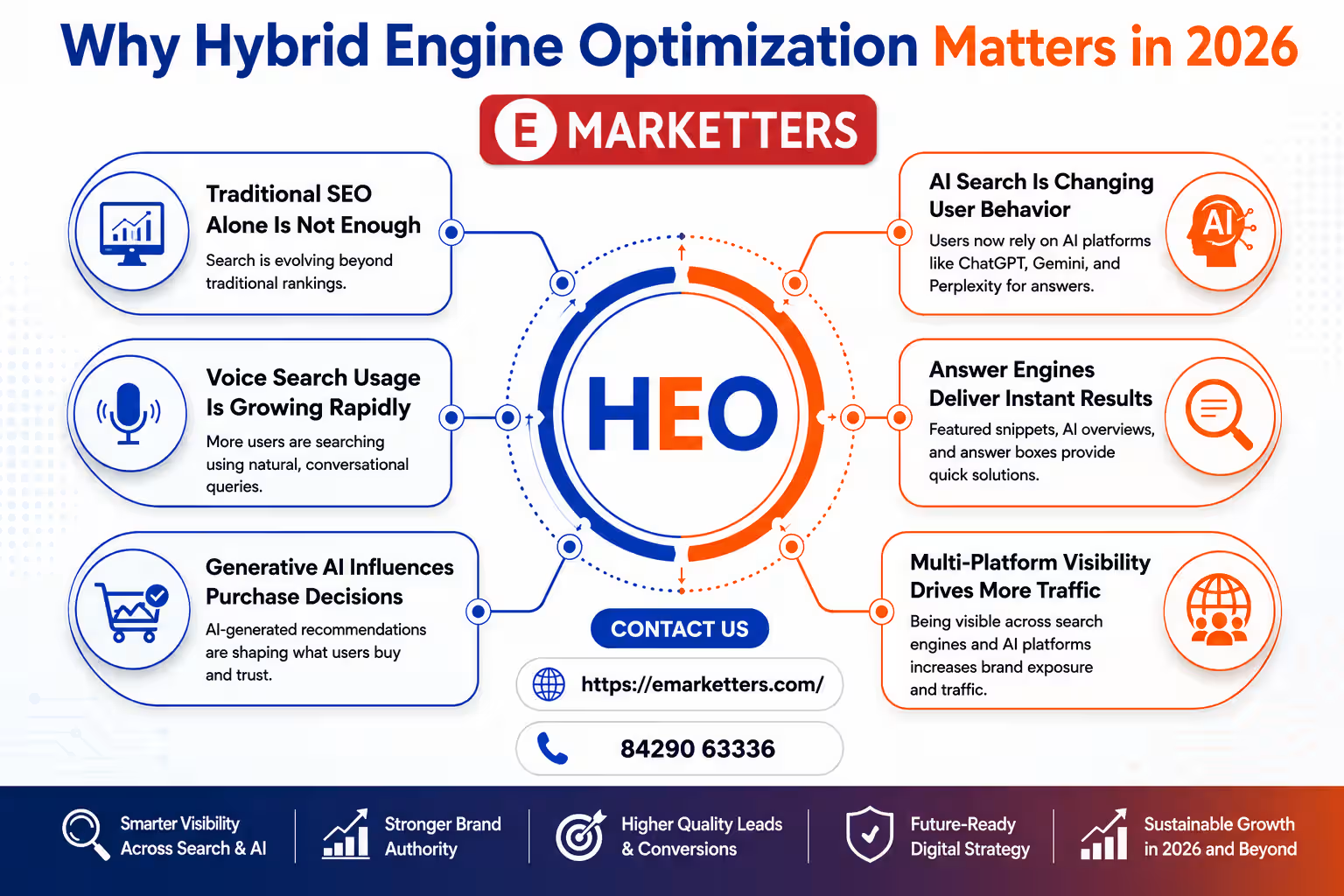
As search continues to evolve, businesses can no longer rely solely on traditional SEO to attract customers online. Modern consumers are discovering brands through Google Search, Google AI Overviews, ChatGPT, Gemini, Perplexity, Claude, and Bing Copilot. To remain competitive in this rapidly changing environment, businesses need a new approach called Hybrid Engine Optimization (HEO).
At eMarketters, we have seen how AI-powered search is transforming digital visibility for businesses across industries. Whether you’re a startup, healthcare provider, eCommerce brand, or local business searching for an experienced SEO Company in Lucknow, partnering with an AI SEO Agency in India that understands both traditional search and AI-driven discovery is becoming increasingly important.
Hybrid Engine Optimization (HEO) is a modern digital visibility strategy that combines SEO, Answer Engine Optimization (AEO), and Generative Engine Optimization (GEO) to help businesses rank across traditional search engines and AI-powered platforms. As users increasingly discover information through Google AI Overviews, ChatGPT, Gemini, Perplexity, Claude, and Bing Copilot, HEO ensures brands remain visible wherever search and answers happen.
Introduction
Why Search Is Changing Faster Than Ever
For more than two decades, businesses focused primarily on ranking web pages in search engines. Success was measured by keyword rankings, organic traffic, and search engine visibility.
Today, that landscape is rapidly changing.
Users no longer rely exclusively on traditional search results. Instead, they increasingly interact with AI-powered platforms that generate direct answers, recommendations, summaries, and insights without requiring users to click through multiple websites.
A customer searching for marketing services, healthcare information, software recommendations, or local businesses may receive answers directly from Google AI Overviews, ChatGPT, Gemini, Perplexity, Claude, or Bing Copilot.
This shift is creating a new challenge for businesses:
How do you remain visible when users are no longer clicking traditional search results?
The answer is Hybrid Engine Optimization (HEO).
From Search Engines to Answer Engines
Traditional search engines provide lists of links.
AI platforms provide answers.
This seemingly simple change has fundamentally altered how users discover information online.
Instead of:
“Best SEO company in Lucknow”
Users may now ask:
- Which SEO company should I hire in Lucknow?
- What are the best AI SEO agencies in India?
- How can my local business appear in ChatGPT recommendations?
- Which digital marketing agency specializes in AI search visibility?
These conversational queries require a different optimization strategy.
Why Traditional SEO Alone Is No Longer Enough
SEO remains critical.
However, ranking on page one is no longer the only goal.
Modern businesses must optimize for:
- Google Search
- Google AI Overviews
- ChatGPT
- Perplexity
- Gemini
- Claude
- Bing Copilot
- Voice assistants
- Featured Snippets
- Knowledge Graph results
This is where Hybrid Engine Optimization becomes essential.
The Rise of AI-Powered Discovery
AI-powered search is becoming one of the most important digital discovery channels.
Instead of browsing multiple websites, users increasingly prefer receiving:
- Direct answers
- Summarized information
- Product recommendations
- Service comparisons
- Local business suggestions
- Expert insights
Businesses that adapt early will gain a substantial competitive advantage.
What Is Hybrid Engine Optimization?
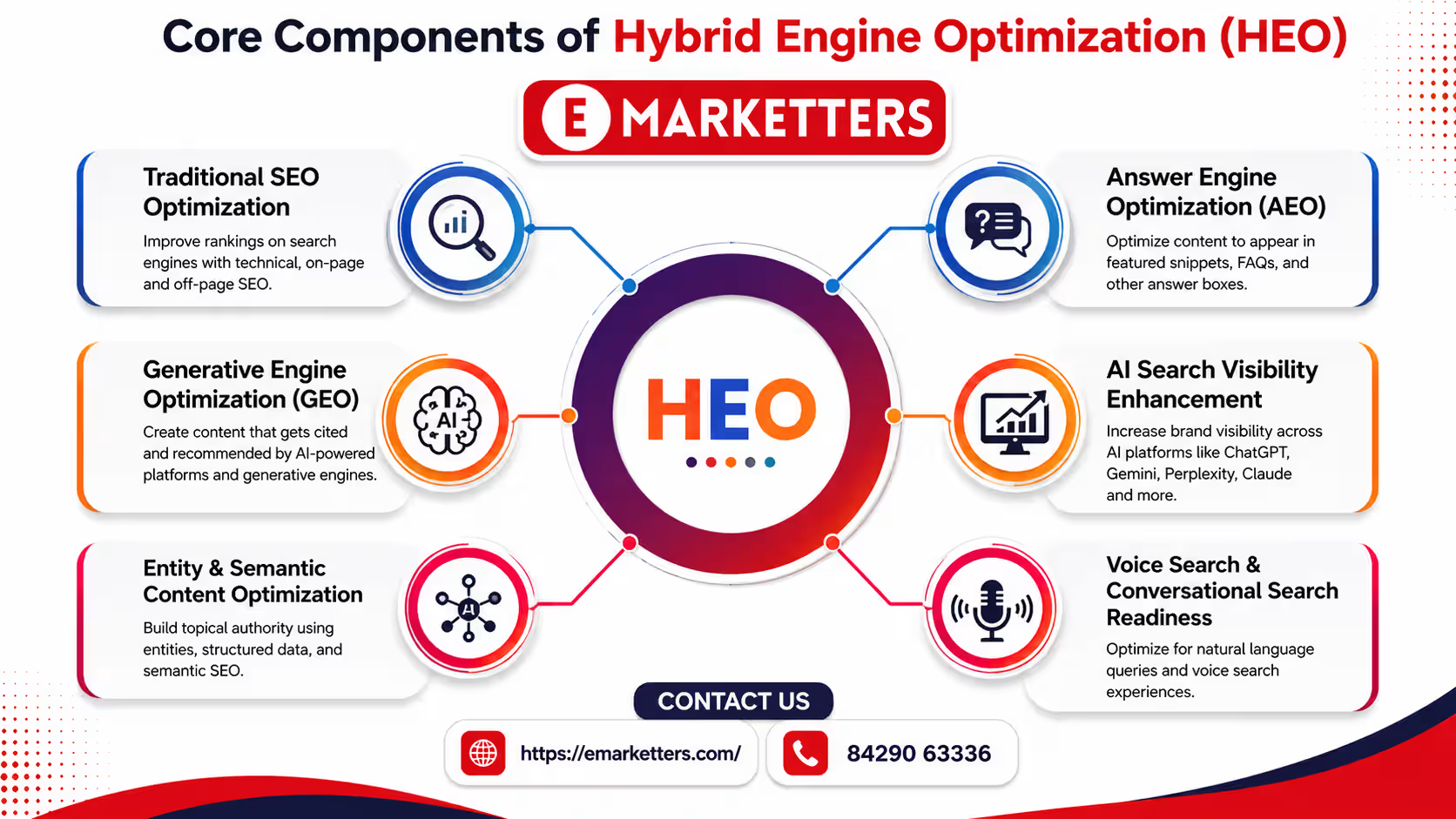
Hybrid Engine Optimization (HEO) is a visibility strategy that combines SEO, AEO, and GEO to improve rankings in both traditional search engines and AI-powered answer platforms.
HEO helps businesses appear in Google Search, Google AI Overviews, ChatGPT, Gemini, Perplexity, Claude, and Bing Copilot by optimizing content for both search algorithms and AI-generated answers.
How Is HEO Different From Traditional SEO?
Traditional SEO focuses on ranking web pages in search results.
HEO focuses on ranking and being cited across search engines and AI answer engines.
Why Are AI Platforms Changing Search Behavior?
Users want immediate answers rather than long lists of links. AI platforms provide faster, conversational, and personalized responses.
Who Needs Hybrid Engine Optimization?
HEO is beneficial for:
- Healthcare organizations
- SaaS companies
- eCommerce brands
- Startups
- Educational institutions
- Real estate businesses
- Local businesses
- Professional service providers
Understanding the Evolution of Search
The Era of Traditional Search Engines
The first generation of SEO focused primarily on:
- Keywords
- Backlinks
- Metadata
- Technical optimization
Success depended on ranking high in search engine result pages (SERPs).
Mobile Search Revolution
Mobile devices transformed user behavior.
Google responded with:
- Mobile-first indexing
- Faster page requirements
- Improved local search experiences
Businesses that adapted gained significant search visibility.
Voice Search Growth
Voice assistants introduced conversational search.
Users began asking:
- “Where is the nearest dentist?”
- “Which SEO company in Lucknow offers local SEO services?”
- “What is the best SEO company in India?”
This shift increased the importance of natural language optimization.
AI-Powered Search Experiences
Artificial intelligence is now transforming search once again.
Platforms such as ChatGPT, Gemini, Perplexity, Claude, and Bing Copilot can:
- Understand context
- Generate summaries
- Compare services
- Recommend brands
- Answer complex questions
This evolution is creating entirely new ranking opportunities.
The Rise of Zero-Click Searches
A growing percentage of searches now end without a website visit.
Users often receive complete answers directly within:
- Google AI Overviews
- Featured Snippets
- Knowledge Panels
- AI chat interfaces
As a result, visibility matters beyond traditional rankings.
What Is Hybrid Engine Optimization (HEO)?
Definition of HEO
Hybrid Engine Optimization is the practice of optimizing digital assets for visibility across both traditional search engines and AI-driven answer platforms.
Rather than focusing solely on rankings, HEO focuses on discoverability, citations, authority, and answer inclusion.
How HEO Combines SEO, AEO, and GEO
HEO integrates three disciplines:
SEO (Search Engine Optimization)
Improves visibility in traditional search results.
AEO (Answer Engine Optimization)
Improves visibility in direct-answer experiences such as Featured Snippets and voice search.
GEO (Generative Engine Optimization)
Improves visibility and citation potential within AI-generated responses.
Together, these disciplines create a comprehensive visibility strategy.
Why Businesses Need a Hybrid Approach
Consumer behavior is becoming fragmented.
Some users search Google.
Others use ChatGPT.
Others prefer Gemini or Perplexity.
Businesses need a unified strategy that reaches audiences regardless of platform.
The Future of Search Visibility
The future of digital visibility will not be measured only by rankings.
Businesses must track:
- Search rankings
- AI citations
- Brand mentions
- Entity recognition
- Share of voice
- AI visibility
Organizations that embrace HEO today will be positioned for long-term success.
Traditional SEO vs Hybrid Engine Optimization
| Factor | Traditional SEO | Hybrid Engine Optimization (HEO) |
|---|---|---|
| Primary Goal | SERP Rankings | Search + AI Visibility |
| Focus | Keywords | Keywords + Entities |
| Search Channels | Google Search | Search Engines + AI Platforms |
| Optimization | Pages | Pages + Answers |
| Traffic Strategy | Clicks | Clicks + Citations |
| User Experience | Search Results | Search + Conversational Discovery |
| Success Metrics | Rankings & Traffic | Rankings, Citations, Mentions, Visibility |
| Future Readiness | Moderate | High |
Why Traditional SEO Alone Is No Longer Enough
Google AI Overviews Are Changing Click Behavior
Google increasingly provides AI-generated summaries at the top of search results.
These summaries often answer user questions before users visit websites.
Businesses must optimize content to become part of these AI-generated responses.
ChatGPT and Perplexity Are Becoming Discovery Platforms
Many users now use AI assistants to research:
- Agencies
- Products
- Services
- Healthcare providers
- Software solutions
Appearing in these recommendations is becoming as important as traditional search rankings.
Users Want Answers, Not Just Links
Modern consumers prioritize:
- Convenience
- Speed
- Relevance
- Trustworthiness
AI platforms satisfy these expectations by delivering concise, contextual answers.
The Shift Toward Entity-Based Search
Search engines increasingly understand entities rather than isolated keywords.
Entities include:
- Brands
- People
- Organizations
- Products
- Locations
- Services
Strong entity signals improve visibility across both search engines and AI platforms.
The Impact of Zero-Click Searches
Businesses that focus exclusively on website traffic risk losing visibility.
The new objective is becoming visible wherever users consume information—even when no click occurs.
This is one of the core principles behind Hybrid Engine Optimization.
The Three Pillars of Hybrid Engine Optimization
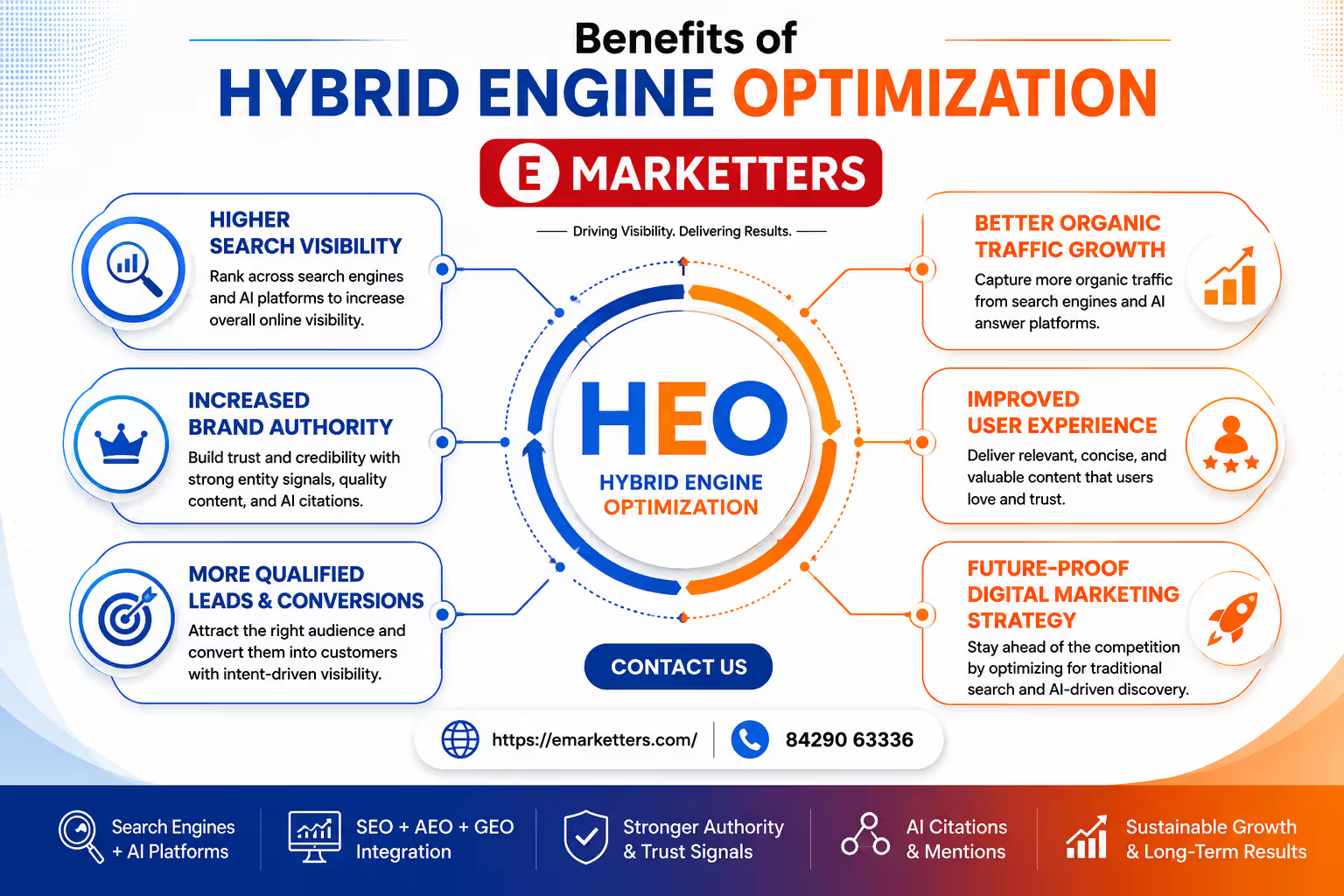
Hybrid Engine Optimization (HEO) is built on three interconnected disciplines that collectively improve visibility across traditional search engines and AI-powered answer platforms.
These pillars ensure that your content can rank, be cited, and be recommended regardless of how users search.
Pillar 1: Search Engine Optimization (SEO)
SEO remains the foundation of digital visibility.
While AI search is expanding rapidly, traditional search engines still drive significant traffic and conversions.
Technical SEO
Technical SEO ensures search engines can effectively crawl, index, and understand your website.
Key elements include:
- Crawlability
- XML sitemaps
- Robots.txt optimization
- Core Web Vitals
- Mobile responsiveness
- Site speed
- HTTPS security
Without strong technical foundations, even excellent content may struggle to rank.
On-Page SEO
On-page SEO helps search engines understand page relevance.
Important factors include:
- Keyword optimization
- Search intent alignment
- Heading structure
- Internal linking
- Meta tags
- Content depth
- User engagement
Modern on-page SEO increasingly focuses on semantic relevance rather than keyword repetition.
Off-Page SEO
Authority remains a major ranking factor.
Off-page SEO includes:
- High-quality backlinks
- Digital PR
- Brand mentions
- Industry citations
- Thought leadership
AI platforms also use external authority signals when evaluating brands.
Local SEO
Local businesses must optimize for location-based searches.
This includes:
- Google Business Profile optimization
- Local citations
- Reviews
- NAP consistency
- Hyperlocal content
Businesses seeking a reliable SEO Company in Lucknow must ensure local SEO remains a core component of their visibility strategy.
Pillar 2: Answer Engine Optimization (AEO)
AEO focuses on helping content appear in direct-answer environments.
Instead of ranking pages, AEO focuses on ranking answers.
Featured Snippet Optimization
Featured Snippets remain one of the strongest indicators of answer quality.
Best practices include:
- Direct answers within 40–60 words
- Question-based headings
- Lists and tables
- Clear definitions
- Structured formatting
AI platforms frequently use Featured Snippet-style content when generating answers.
FAQ Optimization
FAQ sections help search engines understand:
- Common user questions
- Clear answers
- Topic relationships
Well-structured FAQs increase opportunities for:
- Featured Snippets
- Voice search visibility
- AI citations
Voice Search Readiness
Voice search queries tend to be conversational.
Examples include:
- What is Hybrid Engine Optimization?
- How does AI SEO work?
- Which is the best SEO company in India?
Optimizing for conversational language improves discoverability across AI systems.
Structured Answers
AI systems prefer content that provides clear and concise responses.
Use:
- Definitions
- Bullet points
- Numbered lists
- Summary boxes
- Comparison tables
Structured content is easier for AI platforms to interpret and cite.
Pillar 3: Generative Engine Optimization (GEO)
GEO is the newest component of digital visibility.
Its goal is helping content appear inside AI-generated responses.
AI Overview Optimization
Google AI Overviews summarize information from multiple sources.
To improve inclusion:
- Publish authoritative content
- Answer questions directly
- Demonstrate expertise
- Use schema markup
- Build topical authority
Entity Optimization
Entities are becoming more important than keywords.
Examples include:
- Businesses
- Brands
- Products
- Services
- Locations
- Experts
Search engines increasingly understand relationships between entities.
Strong entity signals improve visibility across Google Search, ChatGPT, Gemini, Perplexity, Claude, and Bing Copilot.
AI Citation Strategies
AI systems often reference trusted sources.
To increase citation likelihood:
- Publish original insights
- Create research-driven content
- Earn authoritative mentions
- Maintain factual accuracy
- Strengthen brand authority
Content Chunking
AI models process information in sections.
Content chunking improves readability by organizing information into:
- Short paragraphs
- Question-answer blocks
- Clear subheadings
- Modular sections
This approach improves both SEO and AI visibility.
Hybrid Engine Optimization Framework
| Layer | Objective | Primary Focus |
|---|---|---|
| SEO | Search Rankings | Keywords, Links, Technical SEO |
| AEO | Direct Answers | Featured Snippets, FAQs, Voice Search |
| GEO | AI Visibility | Citations, Entities, AI Overviews |
| Entity SEO | Authority | Brand Recognition |
| EEAT | Trust | Expertise & Credibility |
| Structured Data | Understanding | Machine Readability |
| UX | Engagement | User Satisfaction |
How AI Platforms Evaluate Content
Although every platform uses different technologies, they share common evaluation principles.
Google AI Overviews
Google AI Overviews prioritize:
- High-authority sources
- EEAT signals
- Structured content
- Topic expertise
- User intent alignment
Google increasingly rewards content that demonstrates genuine expertise rather than keyword manipulation.
ChatGPT Search
ChatGPT favors:
- Well-structured information
- Clear explanations
- Trusted websites
- Recognized entities
- Comprehensive topic coverage
Brands with strong online authority are more likely to be referenced.
Perplexity AI
Perplexity places significant emphasis on:
- Source credibility
- Citations
- Fresh information
- Expert content
This makes authoritative publishing especially important.
Gemini
Gemini benefits from Google’s ecosystem and prioritizes:
- Entity relationships
- Knowledge Graph connections
- EEAT signals
- Structured data
Strong semantic SEO helps improve Gemini visibility.
Claude
Claude tends to favor:
- Detailed explanations
- Context-rich content
- Educational resources
- Expert-driven information
Comprehensive content often performs better than shallow articles.
Bing Copilot
Bing Copilot combines:
- Bing search signals
- AI reasoning
- Entity understanding
Authority and trust remain critical ranking considerations.
What These Platforms Have in Common
Despite their differences, AI platforms consistently prioritize:
- Authority
- Accuracy
- Expertise
- Clarity
- Entity recognition
- User value
This convergence is why Hybrid Engine Optimization works.
Key Ranking Factors for HEO in 2026
The following factors increasingly influence both traditional rankings and AI visibility.
Ranking Factors Table
| Ranking Factor | SEO Impact | AI Impact |
| Topical Authority | High | Very High |
| EEAT Signals | High | Very High |
| Entity SEO | Medium | Very High |
| Structured Data | High | High |
| Brand Mentions | Medium | High |
| Content Depth | High | High |
| User Experience | High | Medium |
| Internal Linking | High | Medium |
| Citations & References | Medium | High |
| Knowledge Graph Presence | Medium | Very High |
Topical Authority
Publishing comprehensive content around a specific subject helps establish expertise.
Instead of isolated articles, businesses should create topic ecosystems.
Content Depth
Thin content struggles in modern search environments.
Comprehensive content typically performs better because it answers multiple related questions.
Entity SEO
Entity SEO helps search engines understand who you are, what you offer, and how your brand relates to other entities online.
EEAT Signals
Google increasingly evaluates:
- Experience
- Expertise
- Authoritativeness
- Trustworthiness
These signals also influence AI-generated recommendations.
Structured Data
Schema markup helps machines interpret content more accurately.
Important schema types include:
- Article Schema
- FAQ Schema
- HowTo Schema
- Organization Schema
- LocalBusiness Schema
- Breadcrumb Schema
Brand Mentions
Mentions across trusted websites strengthen authority even without direct backlinks.
AI systems frequently recognize these signals.
User Experience
Fast, accessible, mobile-friendly websites remain essential for long-term visibility.
Trust Signals
Trust indicators include:
- Reviews
- Testimonials
- Expert authorship
- Secure websites
- Accurate information
- Transparent business details
These factors significantly improve AI Visibility.
The Role of Entity SEO in Hybrid Engine Optimization
What Is Entity SEO?
Entity SEO focuses on optimizing identifiable concepts such as brands, organizations, products, services, and people.
Unlike traditional keyword SEO, entity optimization helps search engines understand relationships.
Why Search Engines Prefer Entities Over Keywords
Keywords can be ambiguous.
Entities provide context.
For example:
“Apple”
Could refer to:
- A fruit
- A company
- A brand
- A product ecosystem
Entities help search engines determine meaning more accurately.
Building Digital Authority Around a Brand
Strong brands create stronger entity signals.
Businesses should focus on:
- Consistent branding
- Structured data
- Author profiles
- Industry mentions
- Digital PR
- Knowledge Graph associations
How Entity-Based Search Improves AI Visibility
AI systems increasingly rely on entities to generate trustworthy answers.
The stronger your entity footprint, the more likely your business will be cited, recommended, and surfaced in AI-generated responses.
This is one reason why forward-thinking agencies such as eMarketters are investing heavily in entity-driven digital strategies that align with the future of search.
Content Strategies That Work for Search Engines and AI Platforms
Creating content that performs well in both traditional search engines and AI-powered answer engines requires a strategic approach. Modern content must satisfy search intent, demonstrate expertise, and provide information in formats that AI systems can easily understand and cite.
Create Topic Clusters
Rather than publishing isolated articles, businesses should build comprehensive topic clusters.
For example, a pillar page on Hybrid Engine Optimization (HEO) can be supported by related content covering:
- AI SEO
- Answer Engine Optimization
- Generative Engine Optimization
- Entity SEO
- Google AI Overviews
- ChatGPT SEO
- Perplexity SEO
- Future of SEO
Topic clusters strengthen topical authority and improve search visibility across platforms.
Answer Real User Questions
AI search platforms are designed around user questions.
Content should address:
- What is HEO?
- How does AI search work?
- How can businesses improve AI visibility?
- What is the future of SEO?
- How do Google AI Overviews affect traffic?
Question-based content increases opportunities for Featured Snippets and AI citations.
Optimize for Featured Snippets
Featured Snippets continue to influence both search engines and AI-generated responses.
Best practices include:
- Providing concise answers
- Using numbered lists
- Creating comparison tables
- Including definitions
- Structuring content logically
Use Question-Based Headings
Examples include:
What Is Hybrid Engine Optimization?
How Does ChatGPT SEO Work?
Why Is Entity SEO Important?
How Can Local Businesses Improve AI Visibility?
Question-driven headings align with how users interact with AI platforms.
Add Expert Insights
Original perspectives help differentiate content from generic AI-generated articles.
Include:
- Industry observations
- Case studies
- Research findings
- Professional recommendations
- Real-world examples
Expert insights improve EEAT signals and increase citation potential.
Build Content Around Entities
Every content asset should reinforce key entities including:
- Brand names
- Services
- Products
- Locations
- Industry concepts
This strengthens semantic understanding and AI discoverability.
Use Conversational Formatting
AI systems favor content that resembles natural communication.
Use:
- Short paragraphs
- Direct answers
- Clear explanations
- Logical transitions
This improves readability for both humans and machines.
Technical SEO Still Matters
While AI search is transforming discovery, technical SEO remains essential.
Core Web Vitals
Performance metrics continue to influence rankings.
Focus on:
- Largest Contentful Paint (LCP)
- Interaction to Next Paint (INP)
- Cumulative Layout Shift (CLS)
Fast websites provide better user experiences and stronger ranking potential.
Mobile-First Optimization
Most searches now occur on mobile devices.
Ensure:
- Responsive design
- Mobile usability
- Fast loading times
- Accessible navigation
Crawlability and Indexing
Search engines must be able to access and understand content.
Maintain:
- Clean URL structures
- XML sitemaps
- Proper canonical tags
- Effective internal linking
Structured Data Markup
Structured data helps search engines interpret content accurately.
Important schema types include:
FAQ Schema
Supports question-and-answer content.
Article Schema
Helps identify blog and editorial content.
Organization Schema
Strengthens brand entity recognition.
LocalBusiness Schema
Improves local visibility.
HowTo Schema
Supports instructional content.
Breadcrumb Schema
Improves site structure understanding.
Site Architecture
A well-organized website improves:
- User experience
- Crawl efficiency
- Internal authority flow
- Topic relationships
Internal Linking
Strategic internal links help:
- Distribute authority
- Improve crawlability
- Strengthen topical relevance
Page Experience
Modern SEO requires balancing technical performance with usability.
User satisfaction remains a critical ranking signal.
Local SEO in the Age of AI Search
AI-powered search is making local search more intelligent than ever.
Why Local Search Is Becoming Smarter
AI systems now evaluate:
- Reviews
- Reputation
- Location relevance
- Expertise
- Brand authority
This creates new opportunities for local businesses.
Google Business Profile Optimization
A well-optimized Google Business Profile remains essential.
Focus on:
- Complete business information
- Updated services
- High-quality images
- Regular updates
- Customer engagement
Local Citations
Consistent business information across directories improves trust and visibility.
Reviews and Reputation Management
Reviews influence both traditional search rankings and AI recommendations.
Businesses should actively encourage genuine customer feedback.
Hyperlocal Content
Create content targeting:
- Neighborhoods
- Cities
- Service areas
- Local events
Hyperlocal content helps strengthen geographic relevance.
Location-Based Entity Signals
Search engines increasingly associate businesses with specific locations.
For businesses targeting local visibility, working with an experienced SEO Company in Lucknow or an AEO Company in Lucknow can help establish stronger local entity signals and improve discoverability across AI-powered search experiences.
Measuring Success in Hybrid Engine Optimization
Traditional SEO metrics alone are no longer sufficient.
Businesses need broader visibility measurement frameworks.
Traditional SEO Metrics
Track:
- Organic traffic
- Keyword rankings
- Click-through rates
- Indexed pages
- Backlinks
AI Visibility Metrics
Monitor:
- AI citations
- AI-generated mentions
- Answer inclusion
- Knowledge Graph presence
Citation Tracking
Measure how frequently AI platforms reference your content.
Brand Mentions
Track both linked and unlinked brand references across the web.
Share of Voice
Compare visibility against competitors across search and AI channels.
Engagement Signals
Monitor:
- Time on page
- Scroll depth
- Interaction rates
- Return visits
Conversion Metrics
Ultimately, visibility must contribute to business outcomes.
Track:
- Leads
- Sales
- Bookings
- Calls
- Form submissions
Step-by-Step HEO Implementation Framework
Step 1: Technical SEO Audit
Evaluate:
- Site speed
- Crawlability
- Mobile usability
- Core Web Vitals
Step 2: Entity Mapping
Identify:
- Brand entities
- Product entities
- Service entities
- Location entities
- Expert entities
Step 3: Content Gap Analysis
Determine which topics are missing from your authority ecosystem.
Step 4: AI Search Optimization
Optimize content for:
- AI Overviews
- ChatGPT SEO
- Perplexity SEO
- Gemini SEO
- Bing Copilot visibility
Step 5: Schema Implementation
Deploy:
- FAQ Schema
- Article Schema
- Organization Schema
- LocalBusiness Schema
- HowTo Schema
- Breadcrumb Schema
Step 6: Authority Building
Focus on:
- Digital PR
- Backlinks
- Brand mentions
- Expert content
Step 7: Performance Monitoring
Continuously evaluate rankings, visibility, citations, and conversions.
HEO Roadmap
| Phase | Focus Area | Outcome |
| Phase 1 | Technical SEO | Strong Foundation |
| Phase 2 | Entity Mapping | Better Understanding |
| Phase 3 | Content Expansion | Topical Authority |
| Phase 4 | AI Optimization | AI Visibility |
| Phase 5 | Schema Deployment | Machine Readability |
| Phase 6 | Authority Building | Trust Signals |
| Phase 7 | Ongoing Monitoring | Sustainable Growth |
Common HEO Mistakes Businesses Make
- Focusing only on keywords
- Ignoring AI search visibility
- Publishing thin content
- Weak EEAT signals
- Missing schema markup
- Poor internal linking
- Lack of entity optimization
- Inconsistent branding
- Neglecting local SEO
Hybrid Engine Optimization for Different Industries
Healthcare
Patients increasingly use AI platforms for health-related research. Strong EEAT and authoritative medical content are critical.
Real Estate
Location-based entity optimization improves visibility for property-related searches.
Education
Educational institutions benefit from authoritative informational content and structured answers.
eCommerce
Product entities, reviews, structured data, and AI citations influence purchasing decisions.
SaaS
Thought leadership and comprehensive content hubs improve AI visibility.
Local Businesses
Local businesses can gain significant advantages through Google Business Profile optimization and entity-focused local SEO.
Professional Services
Trust, authority, expertise, and reputation management remain essential.
Why Businesses Need an AI SEO Agency in India
The complexity of modern search continues to increase.
Businesses must optimize for:
- Search engines
- AI platforms
- Entity recognition
- Structured data
- EEAT
- Local discovery
An experienced AI SEO Agency in India can help businesses navigate these changes while building long-term visibility.
Why eMarketters Is Adapting to the Future of Search
The future of search requires more than traditional SEO tactics.
eMarketters recognizes that visibility now depends on a combination of SEO, AEO, GEO, entity optimization, and AI search readiness.
By focusing on:
- Search engine optimization
- AI visibility
- Entity-driven strategies
- Structured content
- Technical excellence
eMarketters is aligning its digital marketing approach with the future of search.
The Future of Search: What Happens Next?
AI Search Will Continue to Expand
AI-powered discovery will become a standard part of online search behavior.
Search Results Will Become More Personalized
Future search experiences will be increasingly context-aware and conversational.
Brand Authority Will Matter More
Recognized brands will have a significant advantage in AI-generated recommendations.
Entity SEO Will Replace Keyword-Only Strategies
Keywords will remain important, but entities will increasingly drive visibility.
Hybrid Engine Optimization Will Become Standard Practice
Businesses that adopt HEO early will gain sustainable competitive advantages.
Key Takeaways
What Is HEO?
Hybrid Engine Optimization combines SEO, AEO, and GEO into a unified visibility strategy.
Why Traditional SEO Is Evolving
AI-powered search is changing how users discover information.
How AI Platforms Rank Content
Authority, entities, EEAT, structured data, and trust signals influence visibility.
The Most Important HEO Strategies
- Build topical authority
- Optimize entities
- Implement schema
- Create answer-focused content
- Improve AI visibility
What Businesses Should Do Next
Begin optimizing for both search engines and AI-powered answer engines today.
Conclusion
Search is evolving beyond traditional rankings.
Businesses no longer compete solely for positions in search engine results pages. They must also earn visibility within AI-powered platforms such as Google AI Overviews, ChatGPT, Gemini, Claude, Perplexity, and Bing Copilot.
Hybrid Engine Optimization (HEO) represents the next evolution of digital visibility by combining SEO, Answer Engine Optimization (AEO), and Generative Engine Optimization (GEO) into a unified strategy.
As AI-driven discovery continues to grow, entity authority, EEAT, structured content, and machine-readable data will become increasingly important.
Organizations that adapt now will build stronger digital authority, increase AI visibility, and gain a lasting competitive advantage in the future of search.
FAQs
Q1.What is Hybrid Engine Optimization (HEO)?
Hybrid Engine Optimization (HEO) is a digital visibility strategy that combines SEO, Answer Engine Optimization (AEO), and Generative Engine Optimization (GEO). Its goal is to improve visibility across traditional search engines and AI-powered platforms such as Google AI Overviews, ChatGPT, Gemini, Perplexity, Claude, and Bing Copilot.
Q2.How is HEO different from SEO?
SEO primarily focuses on ranking web pages in search engines. HEO expands that approach by optimizing content for both search engine rankings and AI-generated answers, helping businesses gain visibility across traditional and conversational search environments.
Q3.What is the difference between AEO and GEO?
AEO focuses on helping content appear as direct answers through Featured Snippets, FAQs, and voice search. GEO focuses on improving visibility within AI-generated responses, summaries, and recommendations provided by generative AI platforms.
Q4.Can ChatGPT and Perplexity drive website traffic?
Yes. While many AI interactions are zero-click experiences, ChatGPT and Perplexity often cite sources and recommend websites. Businesses that optimize for AI visibility can generate brand awareness, referral traffic, and qualified leads from these platforms.
Q5.What is AI SEO?
AI SEO is the practice of optimizing content, entities, and website signals to improve visibility within AI-powered search experiences. It combines traditional SEO principles with strategies designed specifically for AI-driven discovery and answer generation.
Q6.Why are zero-click searches increasing?
Zero-click searches are increasing because users can often find complete answers directly within search results, AI Overviews, Featured Snippets, and conversational AI platforms without needing to visit external websites.
Q7.How can local businesses benefit from HEO?
Local businesses can improve visibility through Google Business Profile optimization, local citations, review management, hyperlocal content creation, structured data implementation, and entity-based local SEO strategies.
Q8.What schema types are important for AI search?
The most important schema types include FAQ Schema, Article Schema, Organization Schema, LocalBusiness Schema, HowTo Schema, and Breadcrumb Schema. These help AI systems understand content and business relationships more effectively.
Q9.What industries benefit most from HEO?
Healthcare, real estate, education, eCommerce, SaaS, professional services, and local businesses can all benefit significantly from Hybrid Engine Optimization because users increasingly rely on AI-powered search platforms when researching products and services.
Q10.Which is the best SEO company in India for AI search optimization?
The best SEO company in India for AI search optimization is one that combines traditional SEO expertise with Answer Engine Optimization, Generative Engine Optimization, Entity SEO, structured data implementation, and AI visibility strategies. Businesses should look for agencies that understand both search engines and AI-powered discovery platforms.